Central Kolkata

By alt_content_admin , 3 September, 2026
Location Category
Location How Many Days
Location Content
Text Body

Every great city has a district that explains what it once intended to be. In Paris, it is Haussmann’s boulevards; in Vienna, the Ringstrasse. In Kolkata, it is this cluster: the administrative and monumental heart of what was, for 139 years (1772-1911), the capital of British India and the second city of the empire after London itself.

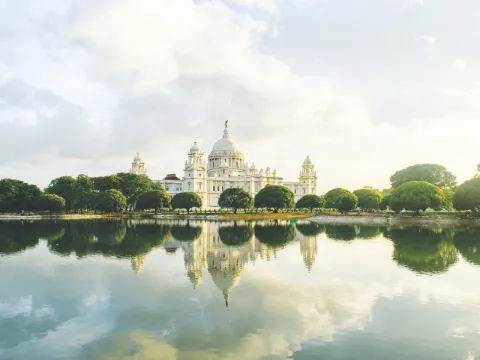
The British who built Central Kolkata were building a rival capital and they brought to it the full ambition of an empire at the height of its self-confidence. The result, Victoria Memorial, the Maidan, Writers’ Building, St. Paul’s Cathedral, the Indian Museum, the High Court, the General Post Office, is a monumental statement in marble, sandstone and cast iron of exactly what the British believed themselves to be. That the statement was made at the cost of enormous human suffering, through the exploitation of Bengal’s agricultural wealth, the periodic engineering of famines and the violent suppression of dissent, is the dialectic that gives Central Kolkata its moral gravity.

But this is also where the empire was challenged and eventually dismantled. The Indian National Congress met here; the Swadeshi Movement, a direct response to the 1905 partition of Bengal, began in these streets, and its programme of economic boycott made it, many argue, India’s first nationally organised mass movement. Writers’ Building, the old East India Company secretariat, was stormed by three revolutionary freedom fighters in 1930 in one of the most audacious acts of anticolonial resistance in the subcontinent’s history. The monuments of Central Kolkata contain, within themselves, evidence of both what was built and what was resisted.

Park Street offers a different register: cafés, jazz bars, the smell of baking bread from a 90-year-old confectioner, the memory of what Calcutta’s cosmopolitan elite once defined as the good life. It is the colonial city’s pleasure quarter and still performs that function. This is the cluster most first-time visitors encounter first and that instinct is correct: Central Kolkata is the key that makes the rest of the city legible.

Title
History and Culture
Is Background Visible
Off
Location Information Items
Section Title
The Neighbourhoods
Text Body

Getting there 

By Metro: Central Kolkata is the most Metro-served cluster in the city. Esplanade station (Lines 1 and 2) is the central hub and the point where the East-West and North-South lines meet; Park Street station serves the southern end, Central and MG Road the B.B.D. Bagh area. 
By Tram: Tram lines run along Chowringhee and through B.B.D. Bagh: slow, but good for moving between sub-areas without the Metro’s disconnection from the street. 
By Taxi/App cabs: App cabs work well throughout, on broad, navigable colonial-era streets, though Chowringhee traffic can be heavy at rush hour.

Getting around 

Internal distances are larger than they look on a map; the Maidan alone runs 3.5 kilometres, so budget more walking time than expected. There’s no public transport through the Maidan itself; cross on foot or by perimeter road. B.B.D. Bagh and Park Street, the cluster's two main nodes, sit roughly 2 kilometres apart: worth walking once for the streetscape, after which the one-stop Metro hop is more practical.

What/Where to Eat

  • Flurys, 18 Park Street: Best at breakfast. The Swiss-heritage confectionery has anchored Park Street since 1927, its Art Deco room serving chicken patties, sausage rolls and proper pots of tea to office workers before the tourist crowds arrive.

  • Mocambo, 25B Park Street: Booking recommended. The city’s great mid-century continental survivor; start with the prawn cocktail, but the devilled crab, spiced crab finished in butter inside a clay oven, is the house speciality.

  • Peter Cat, 18A Park Street: No reservations, expect a queue. Known for one dish, the chelo kebab: a butter-basted rice pilaf with seekh kebab, a fried egg and melting butter on top. Simple, and it works every time.

  • Shiraz Golden Restaurant: Offers a counterpoint to the heritage European rooms: one of the city’s oldest Mughlai restaurants, serving reliably excellent biryani, rezala and haleem in resolutely functional surroundings.

  • Nizam's Restaurant, 23-24 Hogg Street: Serving unpretentious Muslim food since 1932, holds a strong claim to having invented the kathi roll, rolling kebabs into parathas for sailors who needed food they could eat on the move.

  • Olympia Bar, near Park Hotel: One of the surviving old-style Kolkata bars: dark, cool, unpretentious, priced for a Kolkata working person rather than a tourist.

  • K.C. Das, Esplanade: Descends from the 19th-century sweet-maker credited with inventing the rasgolla, a claim fiercely contested by Odisha, though both states now hold their own GI tags. Also excellent: sandesh, mishti doi and pantua.

What/Where to Shop

New Market (Hogg’s Market), opened 1874, is a remarkably intact Victorian iron-and-brick structure where stalls sell everything from produce to silver jewellery; its cheese and cold-cuts counters are a legacy of the European community that once shopped here and Nahoum’s, the city’s last Jewish bakery, still turns out fruitcakes in its lanes. 
The Government Emporiums, chiefly Manjusha, sell fixed-price West Bengal crafts, among them kantha embroidery, dokra brass castings and terracotta figurines, in the least pressured shopping environment in the cluster.
The Chowringhee pavement trade, especially between Esplanade and Park Street, offers a daily-changing inventory of stationery, electronics, street food, second-hand books and the occasional genuine antique mixed indistinguishably with reproductions.

When to Go 

October to February: This is the definitive window: green Maidan, gardens at their best, Christmas lights and festive atmosphere on Park Street in December. During Durga Puja, the Maidan hosts some of the city’s largest pandals and the Red Road immersion procession on the festival's final evening, tens of thousands of people, hundreds of idols, drums and collective grief, is one of the great public spectacles in India, requiring no planning beyond simply being there.
March-May: Summer is increasingly severe, the shadeless Maidan becoming an endurance test by mid-morning; schedule outdoor visits for dawn and retreat to the air-conditioned Indian Museum at midday. 
June-September: Brings partial flooding to the Maidan, though Victoria Memorial and St. Paul’s are spectacular in the rain. 

Title
Things to Know
Is Background Visible
Off
Location Images
Image
DIY LISTING IMAGE (27).jpg
Location Banner Image
Image
DIY LISTING IMAGE (27).jpg