A scenic wetland sanctuary home to migratory and resident birds
Location Circuits
Location Interest
Location How Many Days
Location Group
Location Content
Text Body
The name says it all. Bil (or beel) is the local Rajbongshi and Koch word for a low-lying depression that holds water year-round, a wetland born not from a river or a dam, but from the very topography of the land itself. Five bils Neeldaba, Bochamari, Raichangmari, Shankhadanga and Rasikbil itself converge at Rasikbil, forming a glistening 175 hectare expanse. This mosaic comprises open water, reed beds and surrounding forest. Together they form the core of one of North Bengal’s most productive ecosystems.
What distinguishes Rasikbil from more famous wetland sanctuaries is its quiet intimacy. This is not Bharatpur, crowded with cycle-rickshaws and jostling telephoto lenses. Rasikbil remains an unhurried place, a place where you can stand at the water’s edge at dawn and hear nothing but the argument of painted storks and the fluting call of a kingfisher carrying across perfectly still water. The West Bengal Forest Development Corporation (WBFDC) has developed the site thoughtfully, adding a modest eco-resort, a wildlife interpretation centre, a deer park and several rescue and rehabilitation facilities, without sacrificing the serene wildness that makes it special.
For the serious birder, a winter visit during peak migration season (November-February) is nothing short of revelatory. For the casual naturalist, the family traveller, or anyone seeking an escape from the bustle of the Siliguri corridor, Rasikbil offers something rarer still: genuine peace.
Geography & Landscape
Rasikbil sits at the foothill of the Sintura Range, a spur of the Eastern Himalayas, in the Tufanganj Community Development Block of Tufanganj Subdivision, Cooch Behar district.
The sanctuary is situated in a natural depression within a landscape that quickly shifts, over just a few dozen kilometers, from the terai grasslands and sal forests of the Dooars region to the snow covered mountains of Bhutan. This proximity to the mountains is central to the wetland's ecological character: the bils are fed by Himalayan run-off and maintain their water levels even through dry months, creating a permanent refuge for resident waterbirds and a reliable winter stopping point for migrant birds travelling south from Central Asia, Ladakh and the higher Himalayan valleys.
The lake is bordered by emergent vegetation, such as tall reeds and grasses, which offer cover for nesting and roosting. Surrounding this area is a forest composed of both mixed broadleaf trees and sal. The forest is not merely decorative: it is part of the Baikunthapur Forest Division and lies within the buffer zone of the Buxa Tiger Reserve, meaning the surrounding landscape is legally protected and ecologically continuous with one of Bengal's most important tiger reserves. The result is a corridor of green threading from the Bhutanese border to the plains, through which wildlife can move relatively freely.
A tribal village sits adjacent to the sanctuary and the human presence here is ancient and intimate. The Koch Rajbongshi communities of this region have lived alongside these wetlands for generations and their traditional ecological knowledge is woven into the landscape.
Birdlife
Rasikbil's reputation as a premier birdwatching spot is entirely well-earned and unmistakable. The sanctuary hosts a rich mix of resident species year-round, augmented each winter by an extraordinary influx of migratory wildfowl from across Asia.
Migratory birds begin arriving from September, peaking between November and February, when the lake surface is often almost hidden beneath the bodies of thousands of ducks, pochards, teals and geese. These migratory birds journey hundreds or thousands of kilometres, originating primarily from Central Asia, Ladakh and the high Himalayan valleys. They seek out Rasikbil's permanent water bodies where they find essential food and shelter. The sanctuary's busy migratory season concludes in March, as the great migration reverses. Following this, Rasikbil reverts to its quieter character, sustained by its resident bird population, though it remains notably lively.
Resident Species
- Great Cormorant: Often seen roosting in trees around the lake margin, wings outstretched to dry. A constant, charismatic presence.
- Painted Stork: Unmistakable in its salmon-pink and white plumage; frequently wades through shallows in search of fish. Nests in the tall trees nearby.
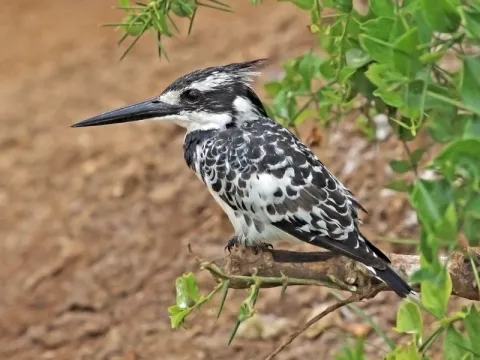
- Pied Kingfisher: Hovers above the water with almost mechanical precision before plunging. Best watched from the shoreline walk.
- Black-headed Ibis: Forages through the shallows in loose groups, its curved bill probing mud for invertebrates.
- Eurasian Spoonbill: Named for its extraordinary spatula-shaped bill, which it sweeps side to side through the water. A striking sight when feeding in groups.
- Grey-headed Lapwing: Delicate shorebird often seen running along the lake margins; recognised by its distinctive black-tipped red bill and grey head.
Winter Migratory Highlights
- Common Teal: The smallest dabbling duck; arrives in large flocks that take off explosively in tight, twisting formations.
- Red-crested Pochard: The male's russet head and coral-red bill make it one of the most photogenic ducks on the lake. Dives for aquatic vegetation.
- White-eyed Pochard: A globally near-threatened diving duck; look for its piercing white eye and rich chestnut plumage.
- Northern Shoveler: Immediately identified by its enormous, spatulate bill used to filter food from the water surface.
- Northern Pintail: Elegance personified; the male's long tail feathers are visible even at distance. Arrives in good numbers at peak winter.
- Lesser Whistling-Duck: Named for its high, whistling call; roosts communally in trees over the water and creates remarkable pre-roost flocks at dusk.
Birding Tips for First-Timers
- Arrive at opening time (9am): the first hour offers the best light and most activity before the midday lull
- Bring binoculars; 8×42 is the ideal specification for wetland birding
- A 400-500mm telephoto lens is recommended for photography; birds on the open water are distant
- Wear muted colours (khaki, olive or grey) to avoid alarming birds at the shoreline
- The watchtower is your best vantage point for an overview; visit it first to scout what's on the lake
- The forest edge around the lake can yield forest species like parrots, owls and kingfishers not visible from the open shore
- The annual Rasikbil Bird Festival (usually late January-early February) brings expert naturalists and guided walks
Title
History and Culture
Is Background Visible
Off
Location Information Items
Section Title
Top Sights and Experiences
Text Body
Getting There
By Air: Bagdogra International Airport (IXB) is the nearest airport, approximately 180-213km away. It has good connections to Kolkata, Delhi, Mumbai and other major cities. To reach Rasikbil from Bagdogra, you can hire a pre-paid taxi or a private cab. The journey, which typically lasts 4-5 hours, follows NH-27 (formerly NH-31) and passes through Siliguri and the Dooars. Arrange the taxi in advance during peak season.
By Train: Kamakhyaguri is the closest station (6km). Several trains on the Kolkata-Guwahati route stop here; from Kamakhyaguri, take a rickshaw or auto to the sanctuary. New Cooch Behar (35km) is the nearest major junction with better connections to Kolkata (Sealdah/Howrah) and the northeast. From either station, hire a local cab to Rasikbil. Alipurduar Junction is also well-connected and about 34 km away.
By Bus/Road: NH-27 (the old NH-31, Siliguri-Guwahati highway) passes through Cooch Behar and Alipurduar. North Bengal State Transport Corporation buses, Bhutan government buses, private coaches and taxis run frequently along this route. From Cooch Behar town, take the Coochbehar-Rampurhat minibus via Tufanganj (approx. 2 hrs to Rasikbil). From Alipurduar, take the buses or shared jeeps to Kamakhyaguri, then 4km to the sanctuary.
Self-Drive/Hired Car: The most flexible option. From NJP/Siliguri: approx. 180-200km (4-5 hrs). From Cooch Behar town: 45km (~1.5 hrs). From Alipurduar: 34km (~1.5 hrs). The roads are good on the main highway; the final approach through Tufanganj is narrower. GPS works well; search for “Rasikbil WBFDC Resort.”
Open: Daily 9am-5pm, closed Thursdays
Entry fee: Nominal (approx. Rs 30-50 for adults; less for children)
Camera fees: Extra charges apply for still and video cameras
When to Go
October to November: This is an excellent time with pleasant weather (18-28°C) following the monsoon. Early migratory birds arrive, and resident birds are very active as the lake is fully replenished.
December to January: This is the peak season, offering maximum species diversity and large numbers of wildfowl during the cool to cold period (10-20°C). Misty mornings and occasional fog are common. The Bird Festival usually occurs within this window.
February to March: Viewing remains very good as the weather warms up (15-28°C) and is comfortable. While migration concludes, resident birds begin their nesting season.
April to May: Bird activity is quiet during this hot, humid period (up to 42°C), though the nesting behaviour of resident birds offers points of interest. Midday can be uncomfortable.
June to September: The monsoon season brings heavy rain and potential flooding, which can make access difficult. However, waterbirds thrive and the landscape is spectacular. It’s advisable to check conditions before visiting.
Title
Things to Know
Is Background Visible
Off
Location Images
Image
Location Banner Image
Image