A spiritual destination known for devotion, rituals and mysticism
Location Category
Location Circuits
Location Interest
Location How Many Days
Location Group
Location Content
Text Body
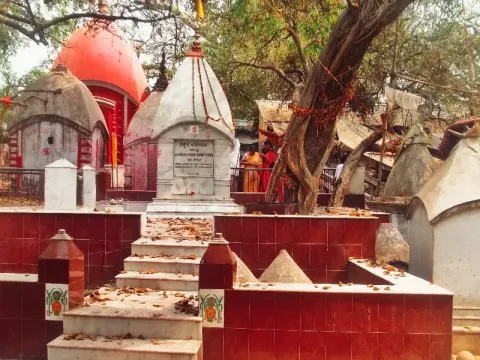
Tarapith is one of India's most significant Shakti Peethas and a major pilgrimage centre in West Bengal's Birbhum district. This small temple town, located along the banks of the Dwarka River, draws thousands of devotees who come to worship Goddess Tara, a fierce manifestation of Kali. Tarapith is a place where ancient Tantric traditions remain vibrantly alive, where cremation grounds serve as sacred spaces, and where the line between the mystical and mundane blurs in fascinating ways.
The town's atmosphere is intense and otherworldly. Saffron-clad sadhus, some smeared with ash from the cremation ground, mingle with pilgrims in the temple courtyard. The air is thick with incense, marigold flowers, and the sounds of bells and devotional chants. For travelers seeking an authentic glimpse into India's Tantric traditions and Shakti worship, Tarapith offers an experience unlike anywhere else
The Legend of Tara
According to Hindu mythology, when Lord Shiva carried the charred body of his consort Sati in grief-stricken rage after her self-immolation, Lord Vishnu cut her body into 51 pieces with his Sudarshan Chakra to calm Shiva. The places where these pieces fell became the Shakti Peethas. Tarapith is believed to be where Sati's third eye (or according to some texts, her navel) fell to earth.
The name “Tarapith” derives from “Tara” (the goddess) and “pith” (seat or abode). The goddess Tara is worshipped here in her Ugra Tara (fierce form) manifestation, depicted with four arms, standing on the supine body of Lord Shiva.
Bamakhepa: The Mad Saint
No discussion of Tarapith is complete without mentioning Bamakhepa, the 19th-century saint who transformed this site into a major pilgrimage centre. Born Bamacharan Chattopadhyay in 1837, he became known as the “mad saint” for his unconventional behavior and intense devotion to Goddess Tara.
Bamakhepa lived and meditated in the cremation ground, practiced tantric sadhana among corpses, and reportedly achieved extraordinary spiritual powers. His presence drew countless followers, and even after his death in 1911, his legacy continues to attract devotees. His ashram and samadhi (memorial) remain important pilgrimage sites adjacent to the main temple.
Tantric Traditions
Tarapith is one of the few places in India where Tantric practices are openly performed. The cremation ground (shamshan) is considered particularly sacred for tantric sadhana, as it represents the ultimate truth of impermanence and the transcendence of worldly attachments. Aghori sadhus and tantric practitioners are commonly seen here, especially during new moon nights (Amavasya) when ritual practices intensify.
Title
History and Culture
Is Background Visible
Off
Location Information Items
Section Title
Top Sights & Experiences
Text Body
Getting There
By Air: The nearest airport is Netaji Subhas Chandra Bose International Airport, Kolkata (180km). From the airport, hire a taxi (4-5 hours) or take public transport to Howrah/Sealdah station for onward train travel.
By Train: The nearest railway station is Rampurhat Junction (6km from Tarapith).
Well connected to Kolkata, Siliguri, Malda, and other major cities.
From Kolkata: Multiple trains daily from Howrah and Sealdah stations (3.5-4.5 hours).
Popular trains: Ganadevta Express, Intercity Express, Mayurakshi Express.
From Rampurhat station, take an auto-rickshaw or shared taxi to Tarapith.
Smaller Stations: Tarapith Road station is closer ( 3km) but has limited connectivity.
By Road: A scenic drive via the NH19 (Durgapur Expressway) and SH14 (Panagarh-Moregram Highway). Expect a 4.5 to 5-hour drive.
Getting Around
Tarapith is a compact town easily explored on foot. The main temple, Bamakhepa Ashram, and cremation ground are all within walking distance.
Auto-rickshaws: Available for short trips within town or to nearby attractions.
Cycle-rickshaws: Leisurely option for short distances.
Bicycles: Some guesthouses offer bicycle rentals for exploring the countryside.
Walking: The best way to soak in the atmosphere and discover hidden temples and ghats.
What to Eat
Food in Tarapith is unique because non-vegetarian food is not taboo; it is often part of the ritual offering (Bhog).
The Bhog: The temple serves free or low-cost Bhog daily. Uniquely, this can include goat meat (mutton) curry, along with fish, rice, and kheer.
Street Eats: The narrow lanes are lined with sweet shops. Try the langcha (a fried sweet) and huge peda.
Restaurants: Most hotels have in-house restaurants serving standard Bengali Thalis (Rice, Dal, Fry, Veg/Non-Veg Curry).
Water: Prefer sealed bottles or filtered water at your stay. In heat/monsoon, dehydration hits quickly in crowded queues.
What to Buy
Tarapith's shopping is primarily oriented toward religious items and souvenirs.
Religious Items:
- Brass and stone idols of Maa Tara
- Rudraksha malas (prayer beads)
- Incense and camphor
- Red and yellow cloth for offerings
- Tantric texts and spiritual books
Textiles:
- Kantha embroidered sarees and stoles from Birbhum district
- Baluchari sarees from nearby Bishnupur
- Cotton fabric with traditional Bengali prints
Handicrafts:
- Terracotta items
- Dokra metal craft from Birbhum artisans
- Bamboo crafts
Sweets:
- Packaged Bengali sweets from local sweet shops
- Nolen gur (date palm jaggery) in winter months
Best time to visit
Winter (November-February): Pleasant days (15-25°C) and cool nights. This is the best time for comfortable exploration. December and January can be foggy.
Summer (March-May): Hot and humid, with temperatures reaching 35-42°C. Visiting temples in the heat can be exhausting.
Monsoon (June-September): Heavy rainfall makes travel difficult, though the landscape turns lush green. The Dwarka River swells considerably.
Post-Monsoon (October): Pleasant weather returns, and Durga Puja celebrations make this an exciting time to visit.
Festival Calendar
Kali Puja (October/November): The most significant festival, celebrated with tremendous fervor on the new moon night of Kartik month. Thousands of devotees gather; book accommodation well in advance.
Durga Puja (September/October): Five-day celebration with elaborate decorations and special pujas.
Neel Puja: Held on the new moon of the Bengali month of Magh (January/February), another major tantric ritual occasion.
Rath Yatra (June/July): colourful chariot procession through the streets.
Kali Amavasya: Every new moon night brings increased activity, with tantric practitioners performing rituals.
Tuesdays and Saturdays: Regular weekly festival days with larger crowds and extended puja timings.
Title
Things to Know
Is Background Visible
Off
Location Images
Image
Location Banner Image
Image