Pine forests, mountain views and peaceful Himalayan villages
Location Circuits
Location Interest
Location How Many Days
Location Group
Location Content
Text Body
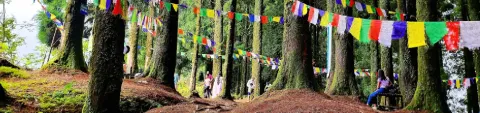
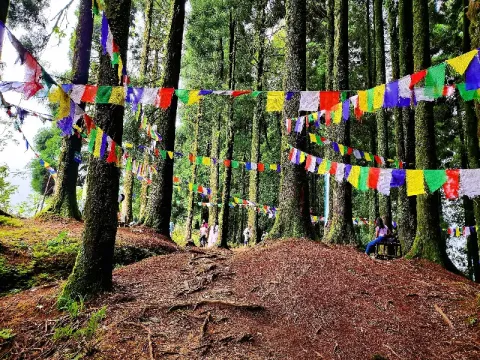
A compact “offbeat triangle” in the Eastern Himalaya where mornings are all about Kanchenjunga light-shows, afternoons smell like pine and damp earth, and evenings end early with chai, momos and a jacket. Lava is the practical base (permits, transport, a small bazaar); Loleygaon is forest-and-views (plus the famous canopy walk); Rishop/Rishyap is the quiet lookout, with minimal fuss and maximum mountains.
For the nature lover, this is the gateway to the Neora Valley National Park. For the weary soul, it is a retreat into the clouds where the mobile signal is patchy, but the connection to nature is full bars.
Quick geography
Lava: small hamlet ~33km from Kalimpong, 2,350m altitude; monastery + Nature Interpretation Centre; gateway to Neora Valley National Park.
Loleygaon/Lolegaon: around 5,500ft and ~56km from Kalimpong; known for Kanchenjunga views and Jhandi Dara sunrise point.
Rishop (Rishyap/Rishap): tiny village with wide-open views of the Kanchenjunga range; mostly homestays.
Title
History and Culture
Is Background Visible
Off
Location Information Items
Section Title
Top Sights and Experiences
Text Body
Getting There
Most people arrive via:
Bagdogra Airport (IXB) or New Jalpaiguri (NJP), then drive to Kalimpong and onward.
Kalimpong → the circuit
Kalimpong → Lava: around 33km.
Kalimpong → Loleygaon: commonly described as 56km and around 5500ft up.
Transport options (how it works on the ground): Shared jeeps run on popular stretches; private cars give the most flexibility for viewpoints, short hikes, and weather detours.
Getting Around
Road Notes: Roads are narrow, winding, and can degrade after rain. Distances look short on paper but time expands in the hills. In monsoon and shoulder-season, landslides and repairs can reroute travel. If your plan includes rougher link roads or early-morning viewpoint hops, a local driver in a hill-ready vehicle is the stress-free choice.
What to Eat
The cuisine reflects the region's Lepcha, Bhutia, and Nepali cultural mix, with strong Tibetan influences.
Must-Try Dishes:
Momos: Tibetan dumplings, either steamed or fried, filled with vegetables, chicken, or pork
Thukpa: Hearty noodle soup perfect for cold mountain evenings
Churpi Soup: Soup made with churpi (hardened cheese), a local specialty
Sel Roti: Sweet, ring-shaped rice bread
Kinema: Fermented soybean curry
Tongba: Traditional millet-based alcoholic drink served warm in bamboo containers
Gundruk: Fermented leafy greens, tangy and nutritious
Po Cha (butter tea): common Himalayan monastery/tea-house staple
Most homestays serve set meals featuring rice, dal, local vegetables, and meat curries. Don't expect extensive menus or dining out options: this is part of the charm.
Practical Tips
Connectivity, Cash, and Comfort: Mobile signals are often patchy (and can vanish in pockets), and power cuts happen. Download maps offline, carry a power bank, and don’t assume UPI will work everywhere. Keep cash for homestays, small shops, and local taxis. Nights can be sharp-cold even outside winter, so pack layers, and ask about hot water/heater options before booking.
Quick health notes: If you’re prone to headaches or nausea at altitude, hydrate aggressively, go easy on alcohol the first night, and keep basic meds/ORS handy. Medical facilities are limited in the villages, so plan like you’re self-sufficient for minor issues.
Best Time to Visit
Best Time: October to mid-December and March to May
The post-monsoon months offer crystal-clear views of the Himalayan peaks, particularly at sunrise when Kanchenjunga glows orange-gold. Spring brings rhododendron blooms that paint the forests crimson and pink. Winter (December to February) can be bitterly cold with temperatures dropping below freezing, though snowfall transforms the region into a winter wonderland. The monsoon (June to September) brings heavy rainfall, landslides, and leeches, making travel challenging and views obscured.
Suggested Itineraries
2N/3D (fast): 1 night Lava + 1 night Rishop or Loleygaon (pick one).
3N/4D (sweet spot): 1 night Lava + 1 night Loleygaon + 1 night Rishop.
4N/5D (slow + forest time): Add Kolakham/Neora day and keep one village for a second sunrise.
A clean 4D/3N flow (low friction)
Day 1: Kalimpong → Lava (monastery + slow evening)
Day 2: Lava → Loleygaon (canopy walk + Jhandi Dara)
Day 3: Loleygaon → Rishop (Tiffindara sunrise/sunset, forest walks)
Day 4: Rishop → Kalimpong / onward
Title
Things to Know
Is Background Visible
Off
Text Body
If you have half a day more, Kolakham is a classic add-on from Lava for quieter forests, a more tucked-away feel, and a good base for short woodland walks. Pair it with Changey Falls if water levels and road conditions cooperate. It is especially satisfying in post-monsoon/early winter when the forest is at its greenest.
Title
Nearby Excursions
Is Background Visible
Off
Location Images
Image
Location Banner Image
Image