Take a journey through the city’s timeless landmarks and living heritage
Article Content
Text Body
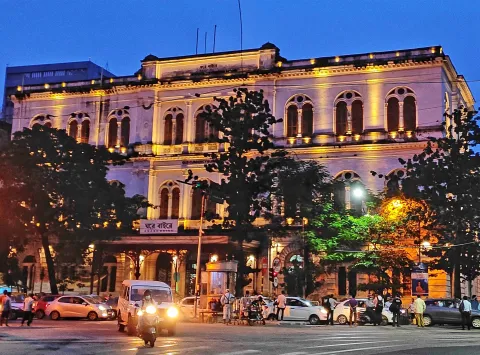
Kolkata has a long and rich history, which is deeply intertwined with the country's colonial past. It is also home to revolutionaries and visionaries who have left their marks on this nation and the world. The city is, therefore, home to monuments and heritage buildings that speak of that layered history – from the General Post Office, Currency Building and Lok Bhavan in the office para to Jorasanko Thakurbari and Nakhoda Masjid in central Kolkata. Here's a list of a dozen must-visit monuments in Kolkata.
Is Background Visible
Off
Upload Images
Image Caption
The grand pillared entryway of the Governor House. (Picture by Rangan Datta, Wikimedia Commons)
Upload Image
Image
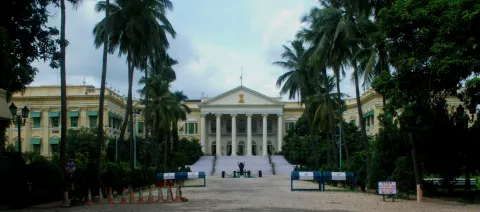
Image Section Title
Lok Bhavan
Is Background Visible
Off
Images View Mode
Simple
Text Body
Built in 1803 by English architect Charles Wyatt, Lok Bhavan or Raj Bhavan was originally called the Government House. It is now the official residence of the Governor of West Bengal and is located in the BBD Bag area.
- Highlights: The Throne Room (with thrones of Richard Wellesley and Tipu Sultan), Marble Hall, Banquet Hall, Grand Staircase, Asia’s first elevator and the Council Chamber
- Public access: Open seven days a week, 11am–12.30pm; entry only with prior permission
Is Background Visible
Off
Upload Images
Image Caption
The GPO clock, imported from England, was made by the makers of London’s Big Ben. (Picture by Rangan Datta, Wikimedia Commons)
Upload Image
Image
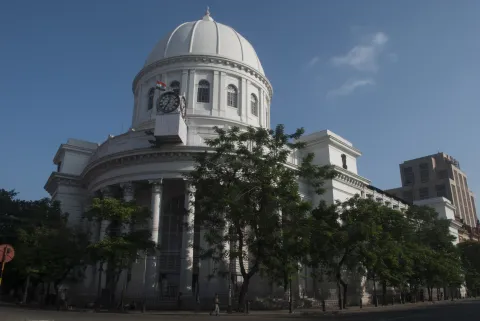
Image Section Title
General Post Office
Is Background Visible
Off
Images View Mode
Simple
Text Body
Locally known by its abbreviation GPO, the General Post Office in Kolkata was the first post office of India designed by Englishman Walter B. Grenville. It has stood tall with its magnificent dome and tower since 1868 inside the south-east bastion of the Old Fort William. The GPO, famed as the birthplace of the country’s first postage stamp, is currently the office of the Post Master General. It celebrated its 250th anniversary in 2024.
- Highlights: Visitors can take a trip down memory lane through its postal museum and collect/buy vintage and new stamps from the Philatelic Bureau
- Public access: Located opposite Raj Bhavan at Dalhousie Square; open Monday–Saturday, 10am–6pm; free entry; closed on Sundays and holidays
Is Background Visible
Off
Upload Images
Image Caption
The Nakhoda mosque is a grand and imposing monument. (Picture by West Bengal Government Repository)
Upload Image
Image
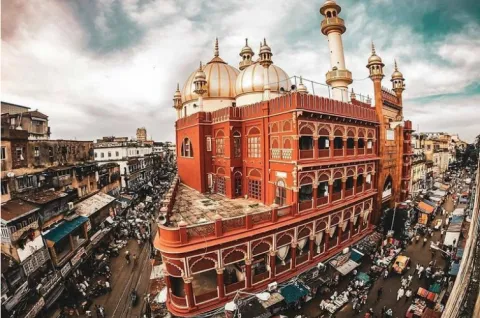
Image Section Title
Nakhoda Masjid
Is Background Visible
Off
Images View Mode
Simple
Text Body
The largest mosque in West Bengal, Nakhoda Masjid features three domes, 27 minarets and a capacity to house over 10,000 devotees. Built by Kutchi Memon Jamat in 1935, it was a brainchild of Haji Zakariah, a merchant, businessman and a respected member of the city’s Muslim community. Another Kutchi Memon devotee, Abdul Rahim Osman, also contributed to its development.
- Highlights: Kolkata’s busiest mosque, Nakhoda (“sailor” in Persian) Masjid’s architecture continues to be its main attraction. It was influenced by Mughal emperor Akbar’s mausoleum in Sikandra, Agra and the main gate is shaped like the Buland Darwaza in Fatehpur Sikri
- Public access: Located in Chitpur, near Zakaria Street; open to all, Monday–Saturday, 11am–9pm
Is Background Visible
Off
Upload Images
Image Caption
The Shaheed Minar was originally named the Ochterlony Monument. (Picture by Ushnish Jana, Wikimedia Commons)
Upload Image
Image
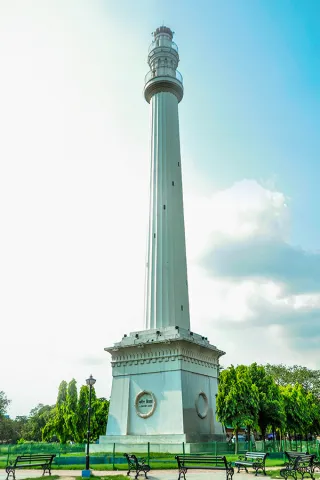
Image Caption
The Ochterlony Monument was renamed Shaheed Minar in 1969. (Picture by Biswarup Ganguly, Wikimedia Commons)
Upload Image
Image
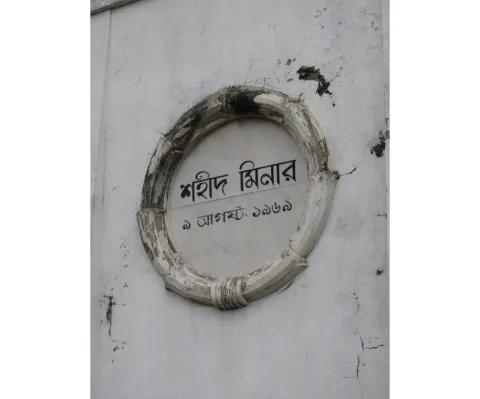
Image Section Title
Shaheed Minar
Is Background Visible
Off
Images View Mode
Simple
Text Body
During Mark Twain’s Kolkata visit, he called the Shaheed Minar, standing in present-day Esplanade, a “cloud-kissing monument”. It was built in 1828 in the memory of Sir David Ochterlony, a commander of the British East India Company. Today, the monument is dedicated to the martyrs (‘shaheed’) of the Indian freedom movement.
- Highlights: 157 feet in height, Shaheed Minar’s European exterior, Turkish dome and Syrian mid-column design remind us of the city’s colonial past and its architectural grandeur. A popular tourist attraction, the tower is often best spotted while driving through the heart of Kolkata on a moonlit night
- Public access: The interior is now open to the public every day, free of cost. You can seek prior police permission to climb the 223 stairs and access the two balconies on top
Is Background Visible
Off
Upload Images
Image Caption
One of the grand gates of Fort William in Kolkata. (Picture by Pinakpani, Wikimedia Commons)
Upload Image
Image
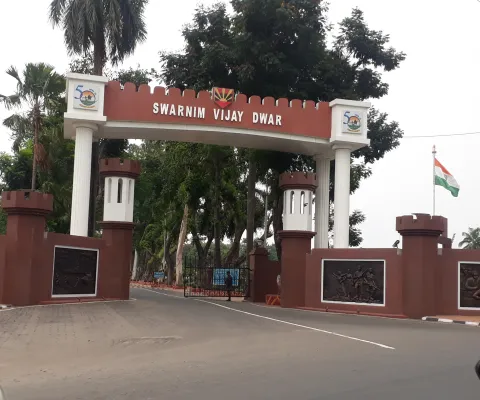
Image Section Title
Fort William
Is Background Visible
Off
Images View Mode
Simple
Text Body
Now, the military headquarters of the Eastern Command of the Indian Army, Fort William is the only fort in the world that has never been besieged, nor has a single shot been fired from its premises. Originally built in 1696 as a guard room, it was demolished during the Black Hole tragedy in 1756. It was rebuilt in 1757 by Sir Robert Clive and dedicated to King William III of England.
- Highlights: Visit the museum which houses war artefacts, colonial cannons and tanks used during the Bangladesh Liberation War
- Public access: It is spread across nearly 71 hectares in the Hastings–Maidan area of Kolkata along the banks of the Hooghly River. You must seek prior permission to enter this active military base, since civilians are not allowed entry inside
Is Background Visible
Off
Upload Images
Image Caption
The sprawling expanse of the Writers’ Buildings is a sight to behold. (Picture by Paul Hamilton, Wikimedia Commons)
Upload Image
Image
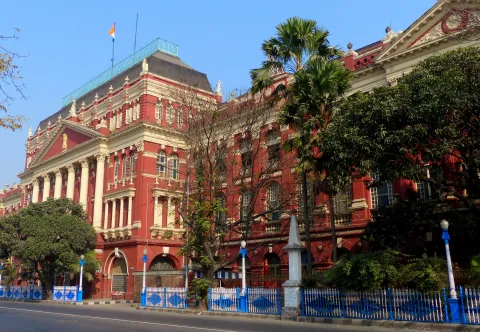
Image Section Title
Writers’ Buildings
Is Background Visible
Off
Images View Mode
Simple
Text Body
This red landmark in BBD Bag was built by Thomas Lyon and commissioned by Richard Barwell over 242 years ago. It was originally built as a boarding house for junior staff, aka ‘writers’ (hence the name), it was later the HQ of the East India Company and Warren Hastings’ administrative office. At one point, it also housed the Fort William College.
- Highlights: This is the site of the assassination of Lieutenant Colonel Simpson, known for his brutality, by freedom fighters Benoy Basu, Badal Gupta and Dinesh Gupta (after whom BBD Bag was named). In recent history, it served as the Left Front government’s seat of power for over three decades
- Public access: It is currently under renovation but even before that, entry was restricted to official work-related visits. But you can admire its grandeur and scale from outside
Is Background Visible
Off
Upload Images
Image Caption
The Grand and the Great Eastern hotels have stood steadfast in ever-changing Kolkata. (Picture by Aashaa, Wikimedia Commons)
Upload Image
Image
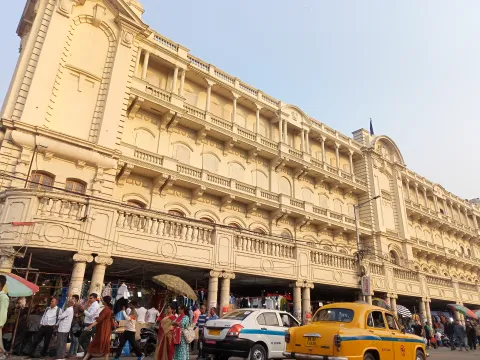
Image Caption
The Grand and the Great Eastern hotels have stood steadfast in ever-changing Kolkata. (Picture by Deepanjan Ghosh, Wikimedia Commons)
Upload Image
Image
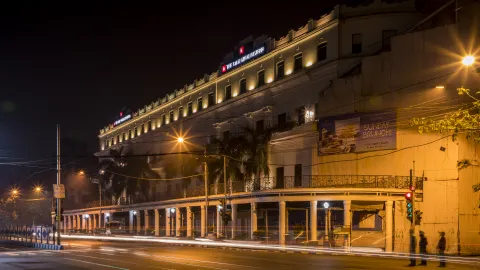
Image Section Title
The Oberoi Grand Hotel & The Lalit Great Eastern
Is Background Visible
Off
Images View Mode
Simple
Text Body
These two popular heritage hotels in Kolkata continue to evoke the city’s old-world charm.
The Grand at the Esplanade–New Market intersection was built by Armenian real-estate tycoon Arrathoon Stephen in 1890. The Great Eastern was constructed as Asia’s first luxury hotel in 1840 by David Wilson. It was originally named the Auckland Hotel, after the British Governor General, Lord Auckland.
- Highlights: Known as, the “Grande Dame of Chowringhee”, The Grand endured closures because of fires and cholera outbreaks in 1911 and 1937, respectively, but still continues to be one of the city’s most prominent boutique hotels The Great Eastern was the longest continuously running luxury hotel in Asia for 165 years until it closed for renovation in 2006. In the past, it hosted illustrious guests such as Mahatma Gandhi, Ho Chi Minh, Queen Elizabeth II and Rudyard Kipling
- Public access: Open 24x7 year-round, for stay and dining options
Is Background Visible
Off
Upload Images
Image Caption
The stately pillars and the lush gardens of the Marble Palace. (Picture by Kanad Sanyal, Wikimedia Commons)
Upload Image
Image
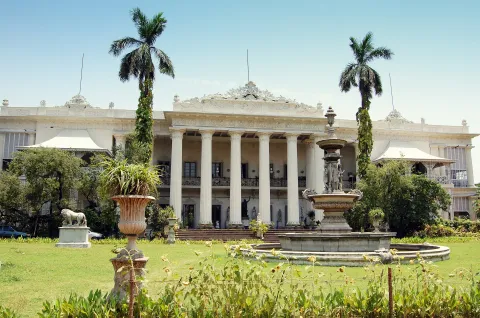
Image Section Title
Marble Palace
Is Background Visible
Off
Images View Mode
Simple
Text Body
Built by Rajendra Nath Mullick between 1835–1840; this is a quintessential example of Kolkata’s neo-classical architecture. As the name implies, it is made purely out of marble. In fact, more than 90 types of marble were used for its walls, ceilings, floors, furniture, chandeliers and sculptures (spread across its five rooms: the Reception Hall, Painting Room, Sculpture Room, Billiards Room and the Thakur Dalan–an open courtyard).
- Highlights: The main attractions include a private zoo, a rock garden and an art museum exhibiting works by European and Indian artists, such as Peter Paul Rubens, Joshua Reynolds, Raja Ravi Varma and Jan Van Goyen
- Public access: Situated at Chor Bagan and close to the Girish Park Metro; it is open Tuesdays to Sunday between 10am and 4pm, closed on Mondays and public holidays
Is Background Visible
Off
Upload Images
Image Caption
The Town Hall hosts seminars, cultural events and exhibitions. (Picture by Sujay Chandra, Wikimedia Commons)
Upload Image
Image
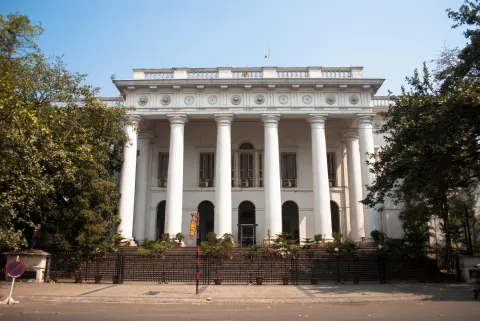
Image Section Title
Town Hall
Is Background Visible
Off
Images View Mode
Simple
Text Body
Another example of a colonial architectural marvel, the majestic white Town Hall was designed by British architect Colonel John Garston in 1807 and was commissioned by Lord Minto. Originally meant as a venue for British social gatherings and cultural events, today it continues to play host to seminars, conferences, lectures, media events, public gatherings and exhibitions.
- Highlights: Rabindranath Tagore celebrated his 50th and 70th birthdays here; Nobel-winning economist Amartya Sen has delivered multiple lectures at the Hall. Kolkata Panorama, a public museum unveiled 2002 focuses on the city’s rich heritage; the library holds items like Calcutta Municipal Gazette, Journal of the Asiatic Society and The Diary of William Hedges
- Public access: Located on Esplanade Row in BBD Bag, it is open to all from Tuesday to Friday between 11am–6pm but closed on Mondays. Tickets for Tuesday-Friday are Rs 10; Saturday/Sunday/public holidays Rs 15; student groups are charged Rs 5 per person
Is Background Visible
Off
Upload Images
Image Caption
Pillared grandeur of Metcalfe Hall. (Picture by Rangan Datta, Wikimedia Commons)
Upload Image
Image
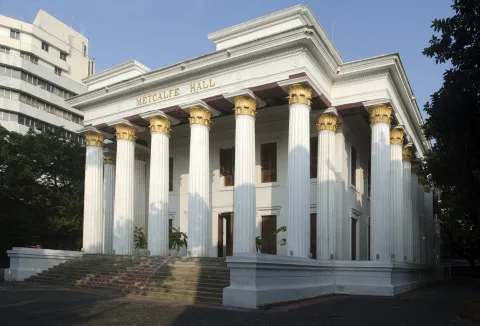
Image Caption
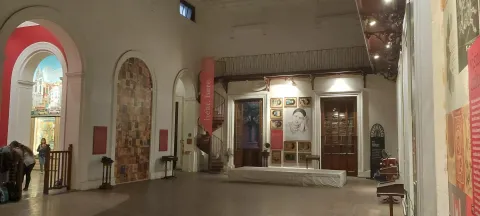
An interior shot of the Metcalfe Hall. (Picture by Pinakpani, Wikimedia Commons)
Upload Image
Image
Is Background Visible
Off
Images View Mode
Simple
Text Body
Named after Governor-General Sir Charles T. Metcalfe, this imperial structure resembles ancient Greek temples and was built in 1844 as a public library and later housed the Imperial Library. Today, it is a popular art museum with a gallery and sales counter run by the Archaeological Survey of India (ASI).
- Highlights: Originally, Dwarkanath Tagore was in charge of the library and its nearly 5,000-odd books. Today, it also houses foreign journals and manuscripts, displayed on the ground floor by the Asiatic Society
- Public access: It stands at the intersection of Strand Road and Hare Street; it is open from Tuesday to Saturday, 10am–6pm. It remains closed on Mondays and national holidays. The entry fee is Rs 20 for Indian, SAARC and BIMSTEC nationals and Rs 250 for other foreign tourists. Tickets are available at the entrance and online on the ASI website
Is Background Visible
Off
Upload Images
Image Caption
The halls of Jorasanko Thakurbari have always been steeped in culture and progressive thought.
Upload Image
Image
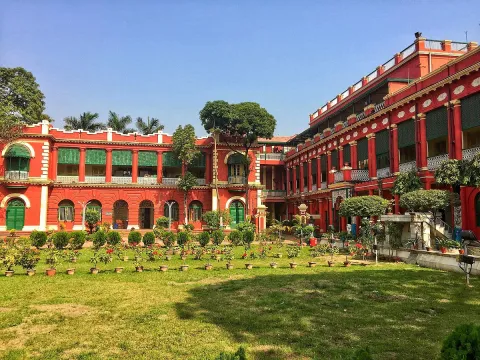
Image Section Title
Jorasanko Thakurbari
Is Background Visible
Off
Images View Mode
Simple
Text Body
The birthplace of Rabindranath Thakur (Tagore), Jorasanko Thakurbari is also the ancestral home of the Tagore family. It is now a museum showcasing their cultural, literary and artistic legacy. The red-bricked, 18th-century mansion was once the centre of the Brahmo Samaj, the Bengal School of Art and the Bengal Renaissance movements.
- Highlights: Maharshi Bhavan (the main building), named after Rabindranath’s father, houses memorabilia belonging to members of the Tagore family. Rabindra Bharati Museum built in 1961 has a vast collection of books, journals, paintings, photographs, sculptures and furniture. Bichitra Bhavan, built by Rabindranath’s Tagore, now houses galleries and archives
- Public access: Situated on the Rabindra Bharati University campus in Singhi Bagan; open Tuesday to Sunday, 10.30am–5.30pm in summer and 10am–5pm in winter; closed on Mondays and public holidays. Entry fee is Rs 20 for adults of Indian nationality; Rs 150 for foreign adults; Rs 30 for adults from SAARC countries; all students get subsidised entry and it is free for students up to Class V and differently abled visitors
Is Background Visible
Off
Upload Images
Image Caption
Kolkata’s skyline is defined by the majestic domes of the Victoria Memorial.
Upload Image
Image
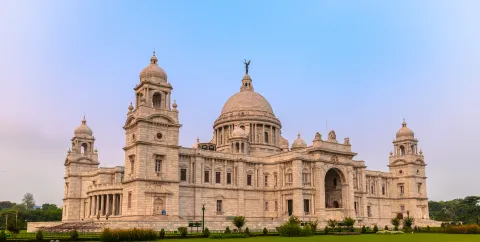
Image Section Title
Victoria Memorial
Is Background Visible
Off
Images View Mode
Simple
Text Body
This majestic marble landmark near the Maidan was inaugurated in 1921. It was designed by William Emerson and Vincent Esch at the order of Lord Curzon, to mark the memory of Queen Victoria. It now draws over 5 million annual visitors both for its 64 acres of gardens (a beloved weekend adda spot) and it's 25 galleries with 50,000+ artworks and artefacts.
- Highlights: It houses works by William Shakespeare and Thomas Daniell and also a rare Arabian Nights manuscript. There are portraits of Queen Victoria and her husband, Prince Albert; exhibits from the time of the Indian freedom struggle include Netaji Subhash Chandra Bose’s personal items and the uniform of Rani Laxmibai’s Jhansi regiment. There is also a gallery dedicated to Kolkata and shows its evolution throughout history
- Public access: The gallery is open from Tuesday to Sunday, 10am–6pm. It is closed on Monday and public holidays. Gallery visitors need to pay Rs 50 (Indians), Rs 100 (nationals of SAARC countries) and Rs 500 (other foreigners). An extra Rs 100 is charged for the 3D light-and-sound show that happens every evening.
The entry fee for the garden is Rs 30 for everyone. It is open all week from 6am–6pm
Is Background Visible
Off
Published on
Article Image
Image
Updated On
Read Time
5-min read
Article Type
Experience
Story
Article Image Mobile
Image
Article Image Caption
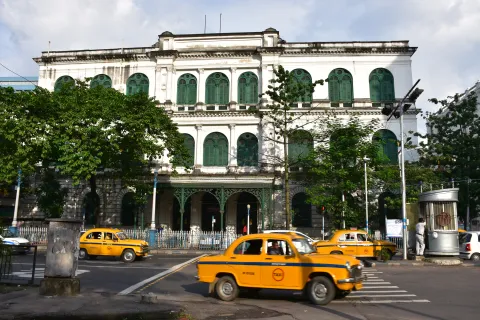
The Currency Building is one of many heritage buildings that add to the city's grandeur.
Article Videos
Is Background Visible
Off
Upload Video
Display Type
Long Description
Content Family
General Purpose
Image Gallery
Upload Images
Is Background Visible
Off
Images View Mode
Simple
Video Gallery
Is Background Visible
Off
Upload Video
gallery view mode
horizontal
sub title
Take a journey through the city’s timeless landmarks and living heritage
banner image
Image
banner image mobile
Image
Comments