A glimpse into Kolkata's grand colonial-era buildings
Article Content
Text Body
Grand mansions with ornate designs that are a living testament to the Raj era define much of Kolkata’s built heritage.
The Indo-Saracenic Victoria Memorial, the Art Nouveau Esplanade Mansions, the Neo-Baroque Metropolitan Building, the neoclassical Marble Palace and the Greco-Roman Writers’ Buildings of Dalhousie Square all co-exist to add diversity to the city’s architectural splendour.
While an exhaustive catalogue is impossible in this limited space, here are some structures that merit special attention.
Is Background Visible
Off
Upload Images
Image Caption
Standard Life Assurance Building (Side View)
Upload Image
Image
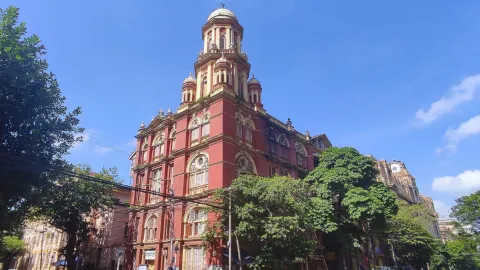
Image Caption
Standard Life Assurance Building (Front View)
Upload Image
Image
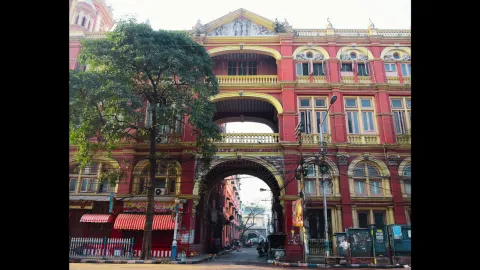
Image Section Title
Standard Life Assurance Building
Is Background Visible
Off
Images View Mode
Simple
Text Body
Address: 32 Hare St, Lal Dighi, BBD Bagh
Erected in 1896 at the junction of BBD Bagh (South) and Red Cross Place, the Standard Life Assurance Building stands as a striking relic of late-Victorian imagination. The deep red-brick structure with pale stone dressings stands out for its monumental central archway and layered balconies. Designed by Frederick W. Stevens, the architect of Victoria Terminus, the building once housed the Calcutta office of the Edinburgh-headquartered Standard Life Assurance Company. The structure was recently restored and allows restricted public access.
Is Background Visible
Off
Upload Images
Image Caption
Metcalfe Hall
Upload Image
Image
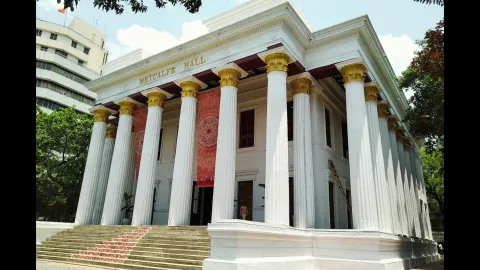
Image Section Title
Metcalfe Hall
Is Background Visible
Off
Images View Mode
Simple
Text Body
Address: 12 Strand Rd, BBD Bagh
The neoclassical landmark named after Sir Charles Theophilus Metcalfe, noted for his advocacy of a free press, was built between 1840 and 1844 to house the Calcutta Public Library (founded in 1836). The building is encircled by a commanding colonnade with 30 colossal Corinthian columns. The majestic structure draws inspiration from the temples of ancient Greece. Metcalfe Hall is home to I Am Calcutta or Ami Kolkata — a city-centric museum.
Is Background Visible
Off
Upload Images
Image Caption
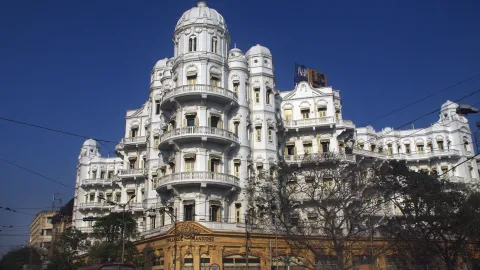
Esplanade Mansions
Upload Image
Image
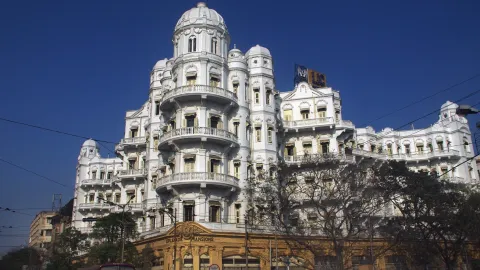
Image Section Title
Esplanade Mansions
Is Background Visible
Off
Images View Mode
Simple
Text Body
Address: At the crossing of Marx Engels Beethi and Esplanade East, opposite Lok Bhavan’s Eastern Gate
Esplanade Mansions was built in the year 1910 at the behest of David Elias Ezra, a Jewish merchant who was commissioner of the Calcutta Municipality in 1876. The building was conceived as a private residence for the Ezra family. Its unique Art Nouveau architecture (a highly ornamental style inspired by natural forms) is marked by a corner tower and cupola, circular balconies and arched windows. The site itself once accommodated Scott Thompson’s shop alongside two adjoining houses before Martin & Co. was entrusted with the task of construction. During the Second World War, the building served as the American Library. It is now owned by the Life Insurance Corporation of India.
Is Background Visible
Off
Upload Images
Image Caption
Metropolitan Building
Upload Image
Image
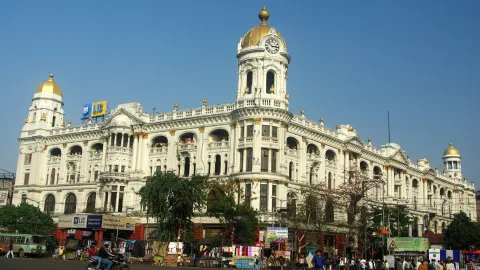
Image Section Title
Metropolitan Building
Is Background Visible
Off
Images View Mode
Simple
Text Body
Address: 140 SN Banerjee Road, Dharmatala
Built in 1905 as Whiteaway Laidlaw, one of India’s earliest department stores, the building was later renamed after passing to Metropolitan Life Insurance and was nationalised in 1956 under the Life Insurance Act. Restored by LIC, the structure is spacious and readily recognised by its commanding corner towers. The façade boasts plain columns crowned with Corinthian capitals, lending it an air of dignified grandeur. The building is frequently referenced in literature, notably Pather Kanta by Saradindu Bandyopadhyay.
Is Background Visible
Off
Upload Images
Image Caption
Marble Palace (Photo: Kanand Sanyal, Wikimedia Commons)
Upload Image
Image
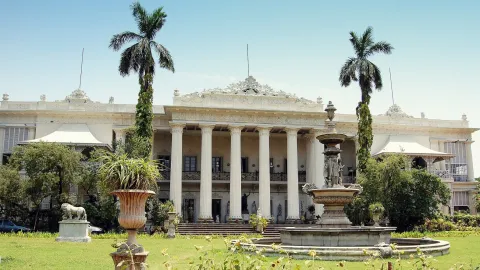
Image Section Title
Marble Palace
Is Background Visible
Off
Images View Mode
Simple
Text Body
Address: 46 Muktaram Babu Street, Opposite Ram Mandir on Jatindra Mohan Sarani, Jorasanko
Marble Palace was erected in the year 1835 by Raja Rajendra Mullick, a prosperous Bengali merchant known for his love for art. The house built in the neoclassical style has elaborate stucco work on its exterior walls, columns and long corridors on each floor. The courtyard has a thakur dalan. The grounds comprise lawns, a rock garden, a lake, and even a mini zoo. Descendants of Raja Rajendra Mullick continue to stay in the palace that houses rare artworks by European artists.
Marble Palace is open to visitors from 10am to 4pm (closed on Mondays and Thursdays).
Is Background Visible
Off
Upload Images
Image Caption
Thakurdalan and courtyard of Jorasanko Rajbari.
Upload Image
Image
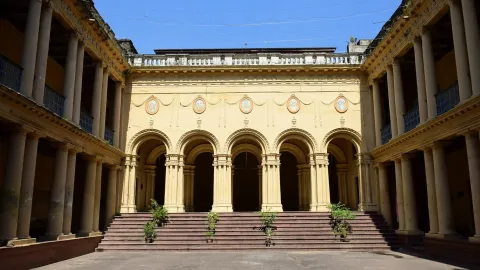
Image Section Title
Jorasanko Rajbari
Is Background Visible
Off
Images View Mode
Simple
Text Body
Address: 286, Rabindra Sarani
Not to be confused with the more illustrious Jorasanko Thakur bari, the birthplace of Rabindranath Tagore. The Rajbari was founded by Ramchandra Roy, the eldest son of Raja Sukhomoy Roy of Posta. Raja Sukhomoy Roy’s lineage can be traced to Naku Dhar, the eminent banker who is said to have advanced a huge sum to Lord Robert Clive during the Battle of Plassey. This ochre-red mansion features a colonnaded façade, arched ground floor, wrought-iron balconies and a spacious courtyard with a five-arched thakur dalan. The residential property permits quiet visitation and was prominently featured in Aparna Sen’s film Goynar Baksho.
Is Background Visible
Off
Upload Images
Image Caption
Thakurdalan and courtyard of Khelat Bhawan. (Photo: Rangan Datta, Wikimedia Commons)
Upload Image
Image
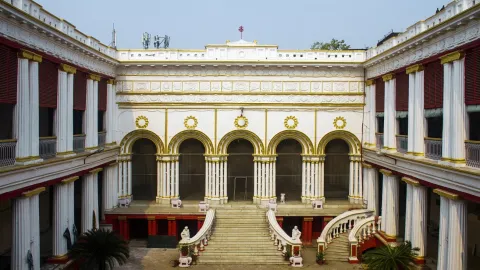
Image Section Title
Khelat Bhawan
Is Background Visible
Off
Images View Mode
Simple
Text Body
Address: 47 Pathuriaghata Street
Born in the year 1829 at his ancestral home of 46 Pathuriaghata Street, Khelat Chandra Ghosh grew to embody a rare union of intellect, enterprise and piety. He earned admiration not only for his success in commerce, but for spirituality and generosity as well. His grandfather, Ramlochan Ghosh, served as a clerk under Warren Hastings. Khelat Chandra Ghosh later built his own mansion with huge corridors, spread out courtyards and a massive thakurdalan. Durga Puja has been held on these premises since 1885. The colossal mansion is now looked after by three trusts. Unlike most of the traditional houses of Kolkata, the present owners of Khelat Bhawan have come up with adaptive reuse of the building, hosting cultural events, wedding ceremonies, photography and film shoots.
Is Background Visible
Off
Published on
Article Image
Image
Updated On
Read Time
5-min read
Article Type
Experience
Story
Article Videos
Is Background Visible
Off
Upload Video
Display Type
Long Description
Content Family
General Purpose
Image Gallery
Upload Images
Is Background Visible
Off
Images View Mode
Simple
Video Gallery
Is Background Visible
Off
Upload Video
gallery view mode
horizontal
sub title
A glimpse into Kolkata's grand colonial-era buildings
action if location
default
Comments