Kalighat means “the ghat of Kali,” and the neighbourhood carries its theological purpose in every lane, with the sacred and the secular sharing the same building, sometimes the same hour.
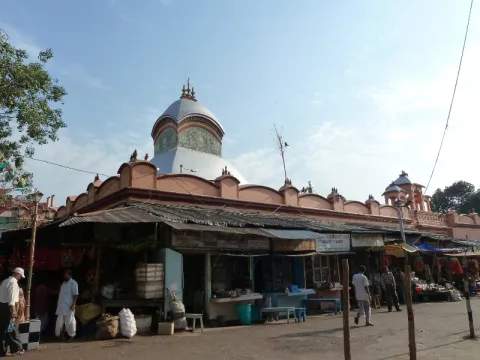
Around the Kalighat Kali Temple (see Top Sights), flower vendors sell marigold and hibiscus offerings, conch shells and drums sound from before dawn, prasad shops sell sanctified sweets and astrologers and panda priests work from designated stations. The Adi Ganga, the old, heavily silted course of the Hooghly, is visible at the ghat below the temple, still a functioning ritual waterway, with flower offerings floating on its surface at dawn.
The dense residential lanes immediately around the temple, homes of priests, devotee families and generations of ritual traders, are largely untouched by modernisation and worth walking slowly.
South of the temple lies Potuapara, a small potters’ colony where patua artists have long made clay idols and painted pats (devotional tablets) for pilgrims. In the 19th century this practice grew into Kalighat painting, a school of rapid, satirical scroll painting with bold outlines and irreverent social commentary that shaped modern Indian art, echoing in the work of Jamini Roy and others. Originals are held at the Victoria Memorial and Indian Museum; reproductions are sold near the temple. Beyond Potuapara, Kalighat gives way to quieter mid-century residential streets stretching toward Alipore.
Article Content
Text Body
Is Background Visible
Off
Published on
Article Image
Image
Updated On
Read Time
2
Article Type
Location
Article Videos
Is Background Visible
Off
Upload Video
Content Family
General Purpose
Image Gallery
Upload Images
Is Background Visible
Off
Images View Mode
Simple
Video Gallery
Is Background Visible
Off
Upload Video
gallery view mode
horizontal
action if location
default
Comments