Address: 6/4 Dwarkanath Tagore Lane
Timings: Tuesday-Sunday, roughly 10:30am-5pm (confirm seasonally); closed Mondays and holidays
Entry: Tiered entry fee (up to Rs. 500 for foreign visitors); photography permitted outdoors only
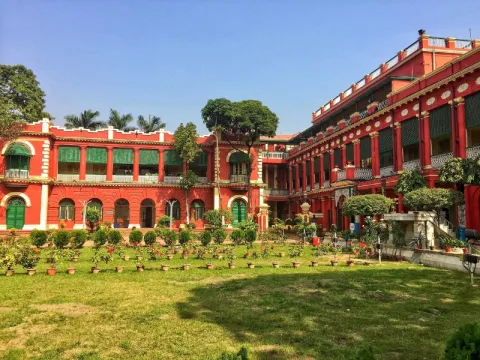
The ancestral Tagore home, where Rabindranath was born, spent his early life and died in 1941. Its core dates to 1784; Dwarkanath Tagore expanded it in the early 1800s and his son Debendranath, the Brahmo reformer, made it a centre of progressive thought; the family’s rejection of purdah meant women took an active role, and the house is credited with the city’s first Brahmo wedding. It became the Rabindra Bharati Museum around 1961; the wider compound was inaugurated as Rabindra Bharati University in 1962 by Jawaharlal Nehru and remains its main campus. Galleries hold Tagore’s manuscripts, Nobel Prize memorabilia and paintings from his last fifteen years; his bedroom is preserved as it was, including the bed on which he died. Other rooms cover the wider family, the Bengal Renaissance and Tagore’s ties to Japan, China, the US and Hungary.
Article Content
Text Body
Is Background Visible
Off
Published on
Article Image
Image
Updated On
Read Time
1
Article Type
Location
Article Videos
Is Background Visible
Off
Upload Video
Content Family
General Purpose
Image Gallery
Upload Images
Is Background Visible
Off
Images View Mode
Simple
Video Gallery
Is Background Visible
Off
Upload Video
gallery view mode
horizontal
action if location
default
Comments