Exploring Bengal's forgotten medieval capitals
Location Category
Location Circuits
Location Interest
Location How Many Days
Location Group
Location Content
Text Body
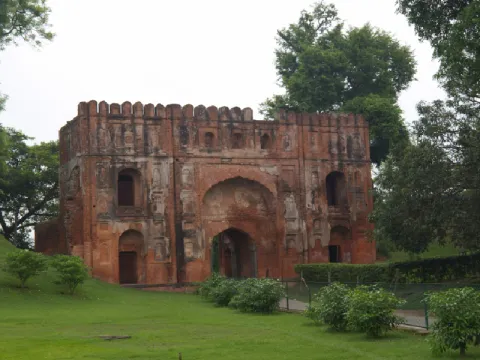
Scattered across the dusty plains of Malda district lie the haunting remnants of two medieval citadels that once ruled Bengal with magnificent splendour. Gour and Pandua, twin historical capitals located about 32 km apart, offer history buffs and archaeology enthusiasts an extraordinary journey through centuries of glory, conquest, and architectural brilliance. These crumbling mosques, towering gateways, and intricate mausoleums whisper tales of sultans, scholars, and spiritual leaders who shaped the cultural identity of Bengal.
Despite their UNESCO-worthy heritage, these sites remain wonderfully off the beaten track. This isn’t a polished, manicured tourist circuit. It’s a raw, evocative, and deeply atmospheric adventure.
History in Brief
Gour (also known as Lakhnauti or Gauda) dates back to the 7th century when King Shashanka established it as a major power centre. The city reached its zenith under the Pala Dynasty, the Sena kings, and later the Bengal Sultanate. From the 12th to 16th centuries, it was one of the most populous cities in the world, a thriving hub of trade, scholarship, and Islamic architecture.
Pandua, located 18km north of Malda, served as the first capital of the Bengal Sultanate for 114 years (1339-1453) before the capital shifted to Gour. Under the Ilyas Shahi dynasty, Pandua flourished as a cosmopolitan centre where Bengali language and identity took root. The city attracted merchants, scholars, and Sufi preachers from across Eurasia, earning it the name “Hazrat Pandua.”
Both cities declined after the 16th century due to a mix of factors: political upheavals, river-course changes, and disease outbreaks. Gour’s final abandonment is often linked to a major plague outbreak around 1575, after which the capital functions shifted away from the city. Parts of historic Gauda/Gour also lie across today’s international border, further fragmenting what was once a single, continuous metropolis.
Title
History and Culture
Is Background Visible
Off
Location Information Items
Location item element
Section Title
Top Sights and Experiences
Text Body
Getting There
Base Camp: Malda Town
Both Gour and Pandua lack accommodation and proper tourist facilities, so base yourself in Malda Town (also called English Bazar), positioned conveniently between the two sites.
By Air: Malda has an airport but (per district tourism information) it is under construction/limited for regular passenger use. The most commonly used airports for visitors are Bagdogra (200km) and Kolkata (350km, 7-8 hours by road).
By Train: Malda Town railway station is well-connected to Kolkata, Delhi, and other major cities. Gour has a small, isolated station, which is not recommended.
By Road: NH 12 connects Malda to Kolkata. Private taxis and cars are easily arranged through hotels.
Getting Around
Hiring a Car: Essential for visiting the ruins. Hotels arrange cars for ₹3,500-4,000 per day covering all major sites. Negotiate rates in advance and confirm which monuments are included.
Suggested Itinerary:
Day 1: Gour (full day, 8am-2pm covers all major sites)
Day 2: Pandua + Jagjibanpur Buddhist Monastery (requires separate day)
Note: Covering both Gour and Pandua in a single day is possible but exhausting. History enthusiasts should allocate 2-3 days in Malda.
Where to Stay
Malda Town offers the only accommodation options. Budget to mid-range hotels cluster near the railway station and along national highways.
What to Eat
Local Specialties to Try: Kansat Chamcham: Malda's famous sweet is a cylindrical cottage cheese dessert in sugar syrup.
Rosokadamba: Another beloved Bengali sweet. It’s a dense, less-sweet cousin of the rasgulla, coated in poppy seeds (posto).
Aamsotto: Sun-dried mango leather made from Gopalbhog mangoes (summer only). A unique delicacy.
Fresh Mangoes: Malda is the mango capital of Bengal. If you're there in season (May-July), you're in for a treat. GI-tagged
Malda mangoes you’ll see everywhere in season: Fazli, Himsagar/Khirsapati, Lakshmanbhog. Malda confectioners have even showcased multiple mango sweets/yogurt variations in recent years.
Best Time to Visit
Best Time: October to March, when temperatures are pleasant (10-25°C) and ideal for exploring outdoor ruins.
Avoid: April to September brings scorching heat (often exceeding 35°C) and heavy monsoon rains that turn archaeological sites muddy and inaccessible. July is the rainiest month.
Special Events: The Ramkeli Mela typically begins around Joishtho Sankranti (often mid-June) and runs for about a week, commemorating Sri Chaitanya Mahaprabhu’s visit to Ramkeli.
Title
Things to Know
Is Background Visible
Off
Location Images
Image
Location Banner Image
Image