For roughly two centuries Kolkata was among Asia’s most cosmopolitan port cities, a fact the built environment still attests to. Armenian traders arrived from Persia in the early 17th century; by 1724 they were wealthy enough to build the Armenian Church of the Holy Nazareth, the oldest church in Kolkata, its churchyard holding gravestones in Armenian script from the 1630s. About 150 Armenians remain in the city, alternating Sunday service between two surviving churches; their college on Mirza Ghalib Street still takes in boarding pupils sent from Armenia, many orphans.
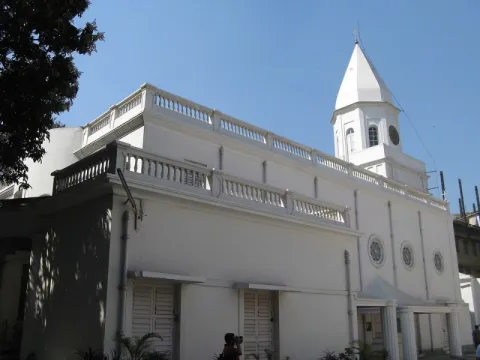
The Jewish community, Sephardic Jews of Baghdadi origin, numbered around 6,000 before World War II. Their first synagogue, Neveh Shalome (1826), was outgrown by 1884, when the grander Magen David Synagogue rose on Canning Street: a red-brick building with a four-storey spire and cavernous, church-like interior. A smaller synagogue, Beth El, stands nearby on Pollock Street, known for its stained glass. Both are under ASI protection, and visiting requires permission, most easily arranged through Nahoum & Son’s Bakery in New Market, still a gathering point for the city’s elderly Jews. Only 30 to 40 Jews are estimated to remain in the city.
Article Content
Text Body
Is Background Visible
Off
Published on
Article Image
Image
Updated On
Read Time
1
Article Type
Location
Article Videos
Is Background Visible
Off
Upload Video
Content Family
General Purpose
Image Gallery
Upload Images
Is Background Visible
Off
Images View Mode
Simple
Video Gallery
Is Background Visible
Off
Upload Video
gallery view mode
horizontal
action if location
default
Comments