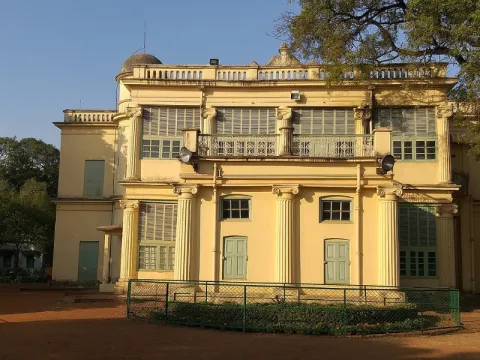
The heart and soul of Santiniketan, this sprawling campus spread over 1,100 acres is a living museum of Tagore's educational philosophy.
Visva-Bharati Heritage Walks: Fridays and Saturdays 3pm, Sundays 10am, 11am, 12pm, 2.30pm and 3.30pm. Tickets sold from 9am on the day of walk at Rabindra Bhavana counter.
Tagore's residential quarters featuring five architecturally distinct houses: Udayan (primarily used to host distinguished visitors), Konark, Shyamali, Punascha, and Udichi (often noted as his last residence here). The complex includes a prayer hall (Upasana Griha) built by Debendranath Tagore in 1863 and displays Tagore's personal belongings, manuscripts, and artwork.
Founded in 1919, this art school shaped by master artist Nandalal Bose features notable murals, including a large black-and-white mural on the Design Department building. It has produced some of India's finest painters and sculptors. Visit during morning hours when students practice in open-air studios.
The epicentre of Rabindrasangeet and performing arts education. Occasional public performances occur during festivals.
Houses an extensive collection of Tagore's works, paintings, Nobel Prize certificate, manuscripts, and personal artefacts. A comprehensive introduction to the poet's multifaceted genius.
Hours: Visva-Bharati official timings are from 10am-5.30pm; weekly off Wednesday & Thursday. Also closed on government and university holidays.
A museum and library dedicated to Sino-Indian cultural exchange, featuring Chinese art and architecture.
Funded by Bangladesh, this complex includes a 450-seat auditorium, museum, and library chronicling Bangladesh's language movement and liberation war, alongside Tagore's connections to the region.
Keep your eyes open for students studying under ancient mango and neem trees, continuing Tagore's vision of nature-integrated education.
Comments