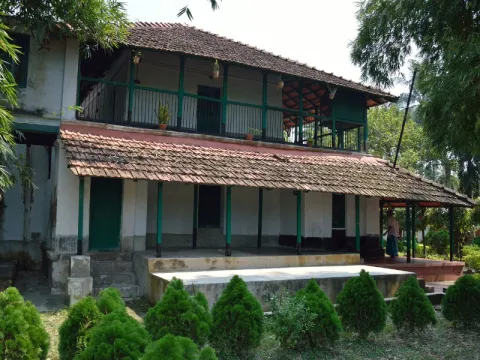
He built this house because he needed silence and a river. Bengal gave him both and in return he gave Bengal its most beloved stories.The Sarat Chandra Kuthi, also known as the Sarat Smriti Mandir, the ‘temple of Sarat’s memory,’ is the primary destination of virtually every visitor to Deulti-Samta and one of those rare museum-houses where the physical experience of the rooms and garden meaningfully illuminates the work created within them. This is not a grand mansion or a heritage palace; it is the carefully preserved home of a writer who lived as simply as the village people he wrote about.
The House
Architecture: The Burmese Influence
The two-storey house reflects Chattopadhyay’s thirteen years in Burma through its Burmese-influenced design: mudbrick walls reinforced with wooden supports, tiled roofs with overhanging eaves and a vertical articulation different from typical Bengali domestic architecture. Construction was completed by local builder Gopal Das in 1923 at Rs 17,000. The name Samtaber, which Chattopadhyay gave to the entire property, is a combination of Sanskrit words suggesting harmony and grove, conveying the quality of refuge he sought here.
Entry: The Kuthi is 3km from Deulti station. No entry fee is charged (a voluntary donation is appropriate). The house is open most days; verify current hours with your accommodation or the Howrah District tourist information before a dedicated trip. Mornings are the most reliable time. Allow at least 1.5-2 hours for a thorough visit.
Comments