Bengal's soul expressed through festivals
Article Content
Text Body
Winter (January–February)
Is Background Visible
Off
Upload Images
Image Caption
Patishapta
Upload Image
Image
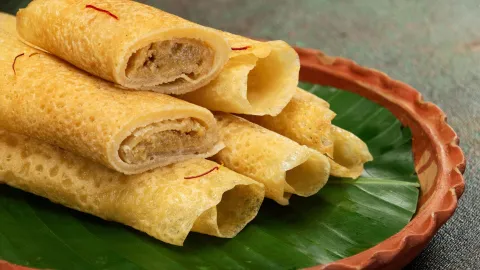
Image Caption
Doodh Puli
Upload Image
Image
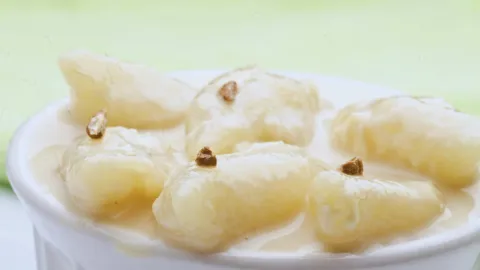
Image Caption
Gokul Pithe
Upload Image
Image
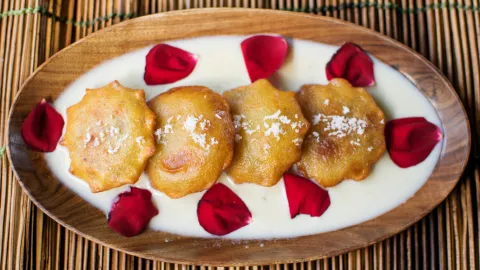
Image Section Title
Poush Sankranti
Is Background Visible
Off
Images View Mode
Simple
Text Body
A harvest festival, it marks the end of the Bengali month of Poush and the start of Magh and falls around January 14-15. This is the season for pithe-puli — sweets made with rice flour and khejur gur (jaggery made from date palm sap in winter). Sample some Patishapta (a crepe-like roll with a filling of coconut or kheer) or Doodh Puli (elongated rice-flour dumplings filled with coconut and jaggery and simmered in milk) or Gokul Pithe (fried dumplings made of semolina and rice with a coconut filling and soaked in sugar syrup) to name a few. These delicacies can be found at Pithe Puli Utsavs held across the state, from VIP Road to Kasba in Kolkata and from Alipurduar to Burdwan. Most sweet shops in the city also sell these seasonal treats.
Is Background Visible
Off
Upload Images
Image Caption
Thousands of devotees gather at the sacred confluence for a holy dip.
Upload Image
Image
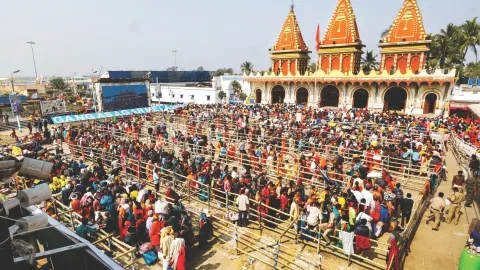
Image Section Title
Gangasagar Mela
Is Background Visible
Off
Images View Mode
Simple
Text Body
The annual event is held at the sacred confluence of the Ganga and the Bay of Bengal on Sagar Island. It is India’s largest spiritual gathering, second only to the Kumbh Mela. Every Makar Sankranti (mid-January), thousands of pilgrims from across the country take a holy dip. The ritual is followed by prayers at the Kapil Muni Temple — the site of a Gupta-era shrine lost to coastal erosion, now replaced by a brick temple. The Sagardwip lighthouse is a nearby attraction. The West Bengal Tourism Development Corporation property at Gangasagar with AC rooms and cottages and on-site parking is a convenient stay option. Gangasagar Mela is also a photographer’s heaven.
Is Background Visible
Off
Upload Images
Image Caption
Red lanterns and dragon dance bring festive cheer to Kolkata's old and new China Town.
Upload Image
Image
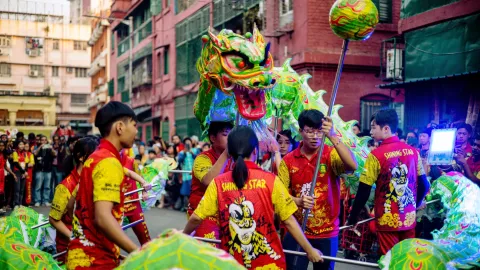
Image Section Title
Chinese New Year
Is Background Visible
Off
Images View Mode
Simple
Text Body
Kolkata’s old and new China Town in Tiretta Bazaar and Tangra come alive with the sights and sounds of Chinese New Year celebrations every February. Streets and homes are decorated with the traditional red lanterns. The highlight of the celebration is the lion or dragon dance. Savour Chinese delicacies such as dumplings, steamed fish, noodles, spring rolls and more. Most Chinese eateries in the city serve a special spread during this time.
Is Background Visible
Off
Upload Images
Image Caption
Prayer flags at Tibetan New Year celebrations.
Upload Image
Image
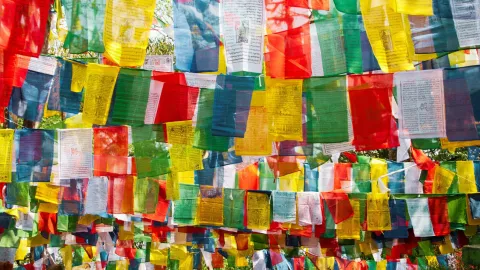
Image Section Title
Tibetan New Year (Losar)
Is Background Visible
Off
Images View Mode
Simple
Text Body
Prayer, music and dance mark the festival in Darjeeling, Siliguri and other parts of north Bengal. Buddhist monasteries and homes are adorned with prayer flags and monks in vibrant costumes take part in a special dance that narrates the victory of good over evil. Guthuk, a traditional soup and chhang, a fermented beverage made from barley, are consumed during Losar. A torchlit procession is also held.
Spring (March-April)
Is Background Visible
Off
Upload Images
Image Caption
Students celebrate with colours and music at Santiniketan's Basanta Utsav.
Upload Image
Image
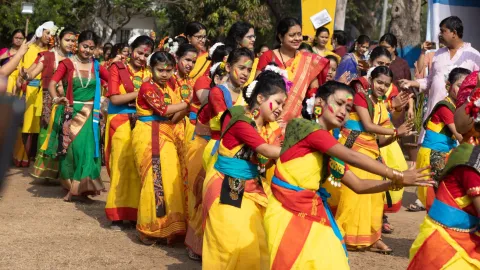
Image Section Title
Dol/Basanta Utsav
Is Background Visible
Off
Images View Mode
Simple
Text Body
The springtime festival of colours, Bengal’s version of Holi, usually falls in March. Visva-Bharati campus in Santiniketan is home to Basanta Utsav, a tradition started by Rabindranath Tagore that heralds spring through music and dance. Students dressed in basanti (yellow) sing, dance and play with abir (gulal) in this unique celebration. This is also the time when shimul and palash — often called flame of the forest for their fiery red and orange hues — flowers bloom. Rabindra Bharati University in Jorasanko, Tagore’s birthplace, also hosts a similar programme of live Rabindrasangeet, dance and poetry.
Is Background Visible
Off
Upload Images
Image Caption
Devotees demonstrate their faith through ritual body art and piercings.
Upload Image
Image
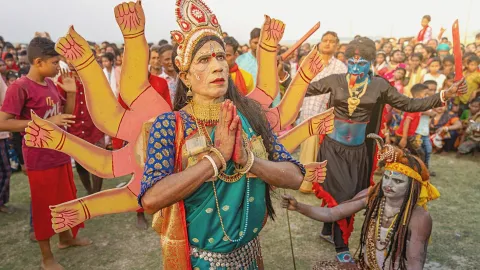
Image Section Title
Charak Puja & Gajan Mela
Is Background Visible
Off
Images View Mode
Simple
Text Body
The twin festivals are celebrated on Chaitra Sankranti, the last day of the Bengali calendar, in mid-April. Charak is dedicated to worshipping Shiva. Participants demonstrate their devotion through body painting and face piercings. Gajan Mela held during this time is marked by acts of penance and physical endurance. The highlight is a “swinging act” by devotees, where they sway from a tall wooden pole called the Charak tree with hooks pierced into their backs. Devotees also dress up as Shiva, Parvati, Krishna and other deities. To witness the rituals (not for the faint-hearted), one has to head for Burdwan, Nadia, Bankura, Murshidabad and Malda. In Kolkata, Kalighat in the south and Beadon Street in the north are key locations. Charak and Gajan offer vibrant photography options.
Summer (April-June)
Is Background Visible
Off
Upload Images
Image Caption
Haalkhata ceremony performed by shopkeepers to mark the start of a new ledger on Poila Baishakh.
Upload Image
Image
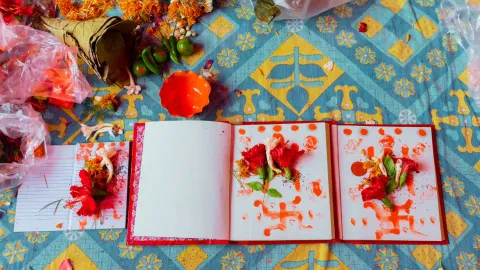
Image Caption
Celebratory payesh and other mishti mark the new year festivities.
Upload Image
Image
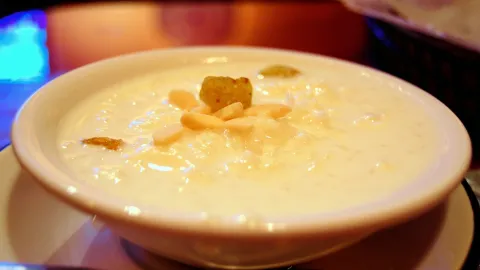
Image Section Title
Poila Boishakh
Is Background Visible
Off
Images View Mode
Simple
Text Body
The first day of the Bengali month of Boisakh marks the new year or Noboborsho. While prabhat pheri, cultural programmes and haalkhata ceremonies (rituals performed by shopkeepers to mark the start of a new ledger on this day) are all part of Poila Boishakh celebrations, the high point is the culinary extravaganza. From Mochar Ghonto to Chingri Malaikari and Sorshe Ilish to Kochi Pathar Jhol, ‘tis the time to indulge your taste buds. The gastronomic journey wouldn’t be complete without mishti (sweets) — be it sandesh or rosogolla, payesh or mishti doi and much much more.
Is Background Visible
Off
Upload Images
Image Caption
White kurtas, festive smiles, and the crescent moon mark Eid.
Upload Image
Image
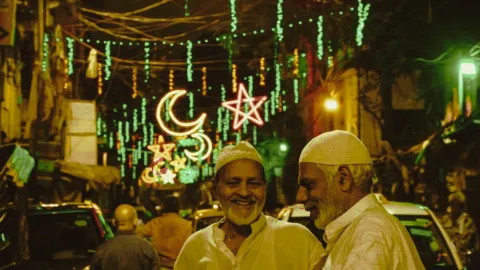
Image Caption
From succulent kebabs to fragrant biryani, Eid is a feast of flavours.
Upload Image
Image
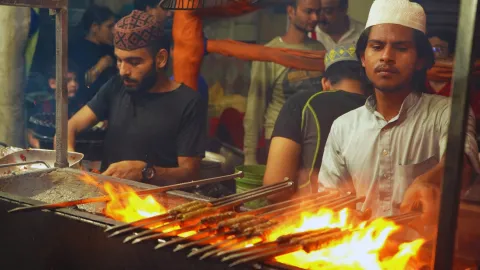
Image Section Title
Eid-ul-Fitr
Is Background Visible
Off
Images View Mode
Simple
Text Body
As Muslims mark the sighting of the new moon with prayers, Bengal celebrates with a feast of biryani (with the customary alu, of course), kebabs and sheer khurma. In the run-up to Eid, the Ramzan food trail beckons on Zakaria Street near Nakhoda Masjid. Soak in the ambience during iftar while you try the bhajias (fries) bakarkhani (flat bread with a hard crust and flaky layers), halwa-puri, Suta Kebab (minced meat wrapped around skewers with cotton thread and grilled), Murg Changezi (chicken in a creamy gravy), haleem, Aflatoon (ice cream served with fruits) and wash it down with Sherbet-e-Mohabbat (a drink made of chilled milk, rose syrup and watermelon).
Monsoon (June-August)
Is Background Visible
Off
Upload Images
Image Caption
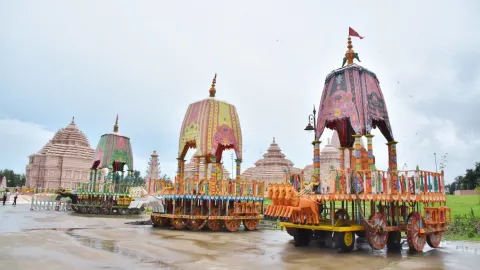
The grand chariot procession at Sri Sri Jagannath Mandir Cultural Center.
Upload Image
Image
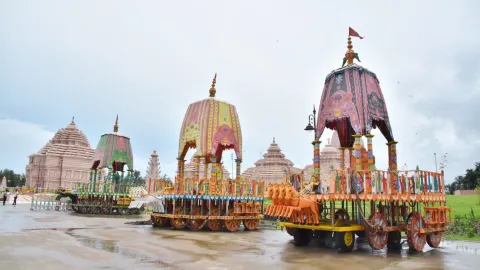
Image Section Title
Rath Yatra
Is Background Visible
Off
Images View Mode
Simple
Text Body
The Sri Sri Jagannath Mandir Cultural Center in Digha hosts a mega Rath Yatra in the seaside town in June/July. Idols of Lord Jagannath, along with his siblings Balabhadra and Subhadra, are placed in ornate chariots and taken out in a grand procession. Traditional rituals such as chhera pahara, where the road in front of the chariots is swept with a golden broom, are performed. Devotees also lend a hand to pull the sacred rope of the chariots for blessings.
Bengal is also home to India’s second-oldest Rath Yatra in Mahesh near Serampore, Hooghly. The deities here travel in a centuries-old chariot named Nandighosa. In Guptipara, Hooghly, Rath Yatra celebrations date back to the 18th Century with a nabaratna-style wooden temple as the chariot. A grand Rath Yatra procession is also held at Mahisadal in East Midnapore.
Rath Yatra is a spiritual and spectacular affair at Mayapur, the global headquarters of ISKCON. In Kolkata, too, the most prominent Rath Yatra procession is organised by ISKCON. Rather Mela (fair) selling colourful jewellery, toys and sundry other items are held across the state. Papad bhaja (fried poppadum), khaja (a crisply fried layered sweet dipped in syrup) and jilipi (Bengal’s answer to jalebi) are must-haves on Rath Yatra.
Autumn (September-October)
Is Background Visible
Off
Upload Images
Image Caption
An intricately decorated Durga Puja pandal.
Upload Image
Image
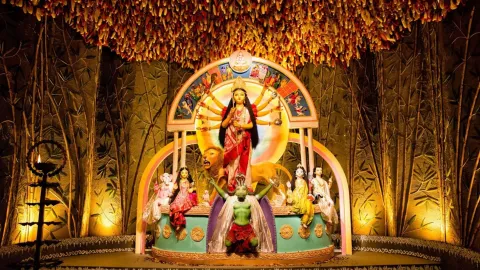
Image Section Title
Durga Puja
Is Background Visible
Off
Images View Mode
Simple
Text Body
Bengal’s grandest and most vibrant festival, Durga Puja is an explosion of creativity. For a few days every autumn, the streets of Kolkata and other towns of the state turn into a live gallery of exquisite craftsmanship. Be it the intricately decorated pandals — from replicas of global landmarks to socially conscious designs or a canvas of the artists’ imagination — and the carefully sculpted idols, it is visual storytelling at its best. Soak in the festive ambience as dazzling lights bathe every corner. For a more quiet experience, there are the centuries-old barir pujos (family pujas) where traditions and rituals take precedence. Each family puja has its own history and story and every idol is unique. The five-day festivities culminate in the grand Red Road Carnival, where over 100 of the best idols and pandals join a farewell procession in a display of masterpieces.
Is Background Visible
Off
Upload Images
Image Caption
Devotees worship Goddess Kali through rituals and offerings.
Upload Image
Image
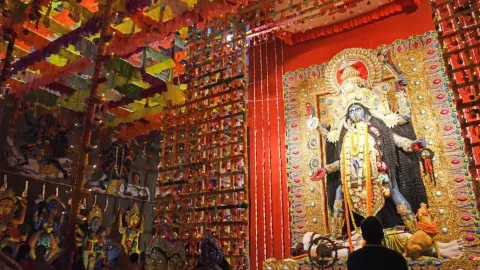
Image Caption
Hundreds of diyas glow in a circle of light and devotion.
Upload Image
Image
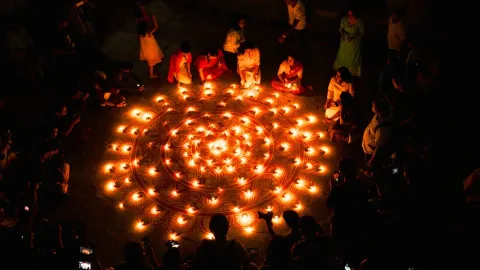
Image Section Title
Kali Puja & Diwali
Is Background Visible
Off
Images View Mode
Simple
Text Body
Festival of Lights meets the worship of Kali, the dark-skinned fiery goddess of time. Kalighat, Dakshineswar and Thanthania are some of the seats of Kali worship besides the many pandals that come up across the state. Kali puja is also held at several ancient houses in Bhowanipore and north Kolkata. For an offbeat experience, visit the Chinese Kalibari in Tangra. Fireworks displays are held at various place.
Is Background Visible
Off
Upload Images
Image Caption
Jagaddhatri Puja lights up Chandannagar with dazzling artistry and devotion.
Upload Image
Image
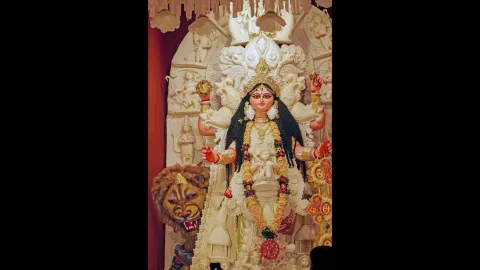
Image Section Title
Jagaddhatri Puja
Is Background Visible
Off
Images View Mode
Simple
Text Body
Celebrated primarily in Chandannagar, Krishnanagar and parts of Hooghly, this is a worship of another form of Durga. The highlight of this festival is the spectacular lights — from 3D lights and animated lights to towers and installations. Chandannagar, in fact, is famous for its light artists and traditionally they were engaged for light displays in Kolkata for Durga Puja as well. Jagaddhatri Puja is also held in Kolkata nowadays.
Holiday season (December-end)
Is Background Visible
Off
Upload Images
Image Caption
Park Street glowing with festive lights and decorations for Christmas celebrations.
Upload Image
Image
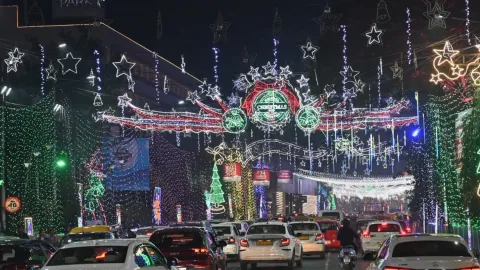
Image Section Title
Christmas
Is Background Visible
Off
Images View Mode
Simple
Text Body
Illuminated streets, soulful carols, rich fruitcakes and an all-pervading joyous spirit sums up Christmas in Kolkata. The festive vibes begin a month ahead as New Market dresses up and shoppers throng the British-era market to buy provisions for Christmas baking, feasting and decorations. Park Street is at the centre of Christmas festivities in Kolkata — the street dazzles with fairy lights and food stalls are set up by Anglo-Indian, Parsi and Chinese families. Bow Barracks, the city’s Anglo-Indian neighbourhood, comes alive with music, dance and community feasts. Don’t miss the Christmas goodies at old-time bakeries such as Flurys on Park Street (there are branches in other parts of the city now, but nothing beats the original tea room), Nahoum’s at New Market and Saldanha in Taltala. Midnight Mass at the magnificent St. Paul’s Cathedral is an experience to remember, if you can find a seat.
Is Background Visible
Off
Published on
Article Image
Image
Updated On
Read Time
7-min read
Article Type
Experience
Story
Article Image Caption
Rath Yatra at the Sri Sri Jagannath Mandir Cultural Center.
Article Videos
Is Background Visible
Off
Upload Video
Display Type
Long Description
Content Family
General Purpose
Image Gallery
Upload Images
Is Background Visible
Off
Images View Mode
Simple
Video Gallery
Is Background Visible
Off
Upload Video
gallery view mode
horizontal
sub title
Discover Bengal’s soul through its festivals, where heritage, spirituality, music, dance and food come alive
Comments