Explore Bengal's most revered religious destinations
Article Content
Text Body
East Midnapore (Purba Medinipur)
Is Background Visible
Off
Upload Images
Image Caption
Bengal’s newest pilgrimage landmark.
Title
Sri Sri Jagannath Mandir, Digha
Upload Image
Image
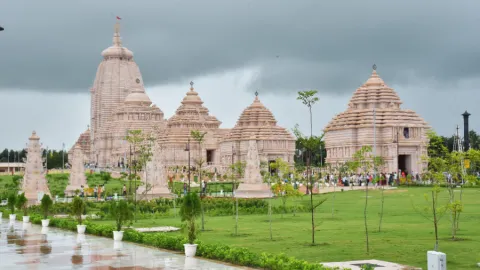
Image Section Title
Sri Sri Jagannath Mandir, Digha
Is Background Visible
Off
Images View Mode
Simple
Text Body
The 213-feet-tall temple built on a sprawling 24-acre campus near Digha is Bengal’s newest pilgrim spot. The temple enshrines idols of Jagannath, Balabhadra and Subhadra. Darshan timings are from 5.30am to 12.30pm and 3.30pm to 9.30pm.
Burdwan
Is Background Visible
Off
Upload Images
Image Caption
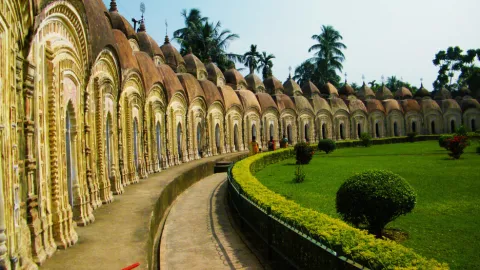
Two concentric circles of terracotta temples create a unique 19th-century architectural marvel dedicated to Lord Shiva.
Upload Image
Image
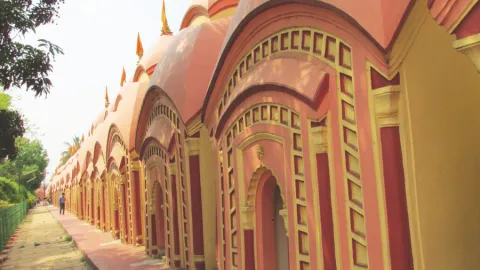
Image Section Title
108 Shiv Mandir
Is Background Visible
Off
Images View Mode
Simple
Text Body
There are, in fact, two such temple clusters in Burdwan— one in Ambika Kalna (19th Century) and the other in Burdwan Town (18th Century). The temples in Ambika Kalna are arranged in two concentric circles, while the ones in Burdwan Town are arranged in a rectangular format.
Is Background Visible
Off
Upload Images
Image Caption
The church is located just off GT Road, next to Curzon Gate.
Upload Image
Image
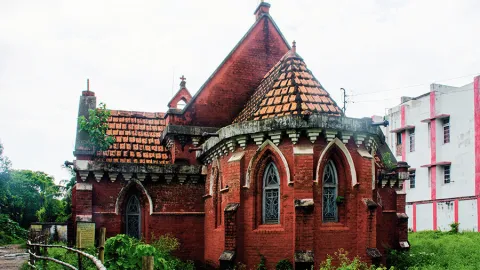
Image Section Title
Christ Church, Burdwan
Is Background Visible
Off
Images View Mode
Simple
Text Body
The brick red church built in 1816 by the Church Missionary Society (CMS, London) is small but elegant. The church opens every Sunday for Mass. Inside, there are memorial plaques dating back to colonial times.
Birbhum
Is Background Visible
Off
Upload Images
Image Caption
The 13th Century temple is located around 80km from Bolpur.
Upload Image
Image
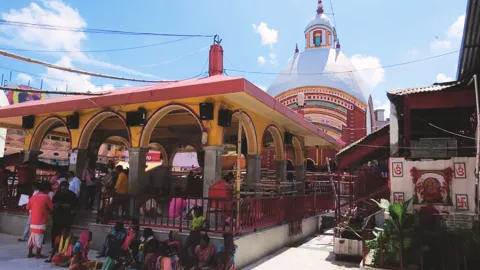
Image Section Title
Maa Tara Temple, Tarapith
Is Background Visible
Off
Images View Mode
Simple
Text Body
The 300-year-old brick red temple in Rampurhat, Birbhum, is another Shakt Peeth where the goddess’s third eye (tara refers to eyeball) is believed to have fallen. Located a little over 200km from Kolkata, the temple is open from 5.30am to noon and 6pm to 10pm.
Murshidabad
Is Background Visible
Off
Upload Images
Image Caption
The church was restored in 2005. (Picture by Czarhind, Wikimedia Commons)
Upload Image
Image
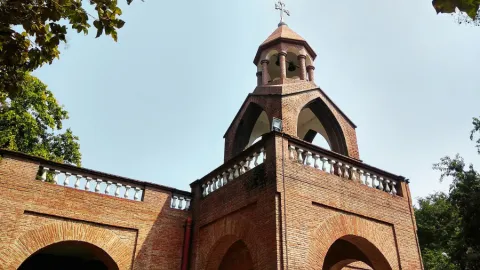
Image Section Title
Armenian Church, Saidabad
Is Background Visible
Off
Images View Mode
Simple
Text Body
Established in 1757 near Behrampore in Murshidabad, this is one of the world’s oldest churches of Mother Mary, outside Armenia. It was reopened after 100 years in the 1980s. Mary and Jesus at this church are not white-skinned. They have an Asian and not European, look. Other Armenian churches in Bengal are St John the Baptist Armenian Church in Chinsurah (1695), Armenian Holy Church of Nazareth in Burrabazar, Kolkata (1707), Holy Trinity Armenian Church of Tangra in Kolkata (1867) and St Gregory the Illuminator Armenian Church in Kolkata (1906).
Is Background Visible
Off
Upload Images
Image Caption
There are two Madina mosques — old and new.
Upload Image
Image
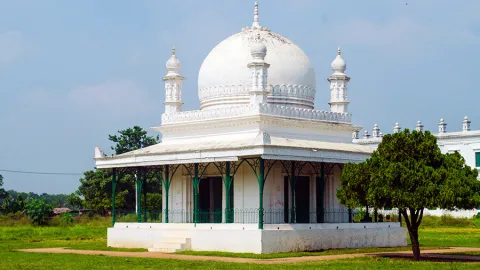
Image Section Title
Madina Masjid, Murshidabad
Is Background Visible
Off
Images View Mode
Simple
Text Body
The old Madina mosque was built by Nawab Siraj ud-Daullah in the 18th Century and the new Madina mosque was built by Nawab Mansur Ali Khan in 1847. Both mosques stand within the Nizamat Imambara complex. Soil collected from Mecca was used while building the original mosque, which was damaged in a fire.
Nadia
Is Background Visible
Off
Upload Images
Image Caption
The temple in Mayapur is one of the most frequently visited religious sites in the world.
Upload Image
Image
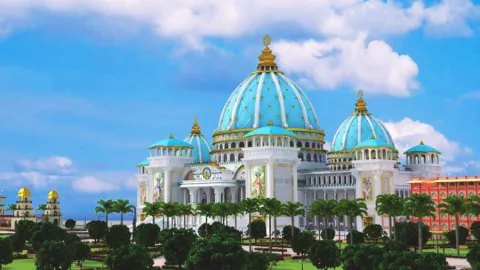
Image Section Title
ISKCON, Mayapur
Is Background Visible
Off
Images View Mode
Simple
Text Body
ISKCON’s Chandrodaya Temple draws global visitors and is the gateway to Nabadwip, believed to be Chaitanya Mahaprabhu’s birthplace and a key site of Vaishnavism in Bengal.
North 24-Parganas
Is Background Visible
Off
Upload Images
Image Caption
The temple was the vision of Rani Rashmoni.
Upload Image
Image
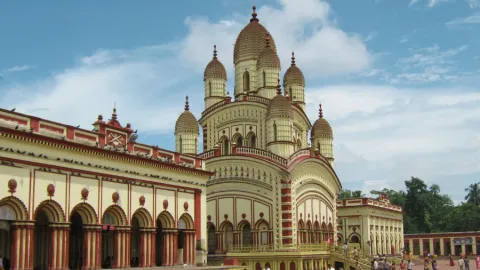
Image Section Title
Dakshineswar Kali Temple
Is Background Visible
Off
Images View Mode
Simple
Text Body
Built by Rani Rashmoni in the mid-19th century, the temple on the Hooghly riverbank had Ramakrishna Paramhamsa as its priest. The temple is open from 6am to 12.30pm and 3.30pm to 7.30pm.
South 24-Parganas
Is Background Visible
Off
Upload Images
Image Caption
Pilgrims offer prayers at Kapil Muni temple after taking a holy dip in the Ganga.
Upload Image
Image
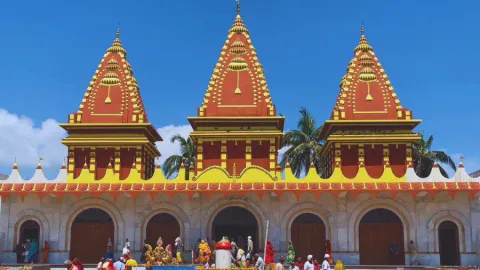
Image Section Title
Gangasagar, Sagar Island
Is Background Visible
Off
Images View Mode
Simple
Text Body
Sagar Island is the confluence of Ganga and Bay of Bengal and also the site of Kapil Muni Temple. Pilgrims come here for a holy dip, especially during the annual Gangasagar Mela held at the time of Makar Sankranti (around January 14).
Howrah
Is Background Visible
Off
Upload Images
Image Caption
Belur is the headquarters of the Ramakrishna Math and Mission.
Upload Image
Image
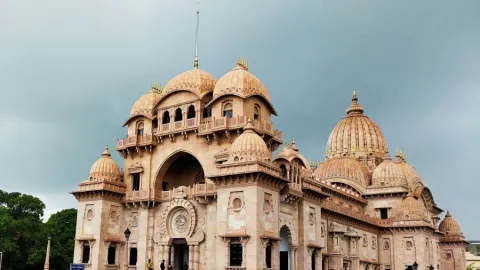
Image Section Title
Belur Math
Is Background Visible
Off
Images View Mode
Simple
Text Body
Envisioned by Swami Vivekananda, Belur Math enshrines Sri Ramakrishna’s sacred relics. The temple complex on the Hooghly riverbank features a nine-spired (navaratna) sanctuary and a sacred ghat. Also to be seen is the room where Vivekananda attained mahasamadhi. It is open from 6.30am to 11.30am and 4pm to 9pm (seasonal variations apply). Prasad is served daily at 11am, coupons must be bought 30 minutes in advance.
Hooghly
Is Background Visible
Off
Upload Images
Image Caption
The temple was built in 1729 by Raja Bharamalla.
Upload Image
Image
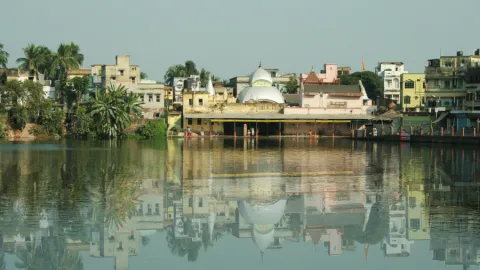
Image Section Title
Taraknath Temple, Tarakeshwar
Is Background Visible
Off
Images View Mode
Simple
Text Body
An aatchala Shiva temple famed for its natural spring (Dudhpukur) where bathers believe their wishes are granted.
Is Background Visible
Off
Upload Images
Image Caption
Pir Mela held at Furfura Sharif every year is a popular destination among pilgrims.
Upload Image
Image
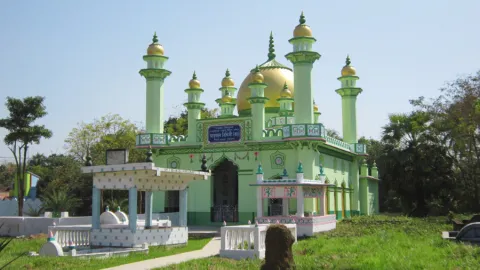
Image Section Title
Furfura Sharif
Is Background Visible
Off
Images View Mode
Simple
Text Body
A Sufi shrine founded in 1375, it is famous for its Urs and Pir mela festivals held in the month of Falfun (March) that draw thousands of devotees annually.
Is Background Visible
Off
Upload Images
Image Caption
The 19th Century structure is an architectural marvel.
Upload Image
Image
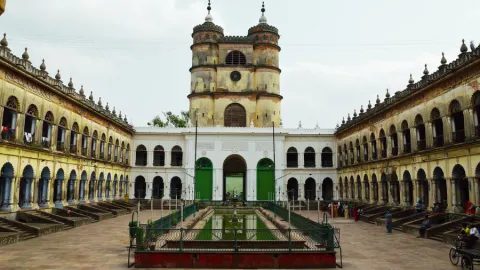
Image Section Title
Hooghly Imambara
Is Background Visible
Off
Images View Mode
Simple
Text Body
The mosque with a huge congregational hall was built by philanthropist Hazi Muhammad Mohsin in 1861. The imposing structure stands on the bank of Ganga. The Imambara is known for the large clock that connects its two towers.
Is Background Visible
Off
Upload Images
Image Caption
One of the oldest churches of West Bengal. (Picture by Grentidez, Wikimedia Commons)
Upload Image
Image
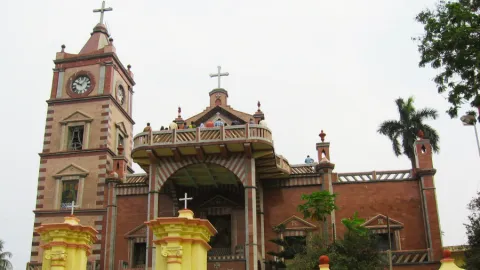
Image Section Title
Basilica of the Holy Rosary, Bandel
Is Background Visible
Off
Images View Mode
Simple
Text Body
The Bandel Church, built by the Portuguese in 1599, is dedicated to Our Lady of the Rosary. The church is open to visitors from 6am to 6pm. It hosts Christmas Mass, Easter services and an annual May Feast dedicated to Our Lady of Happy Voyage.
Kolkata
Is Background Visible
Off
Upload Images
Image Caption
The main temple is dedicated to Kali but the complex also houses Shiva and Radha-Krishna temples.
Upload Image
Image
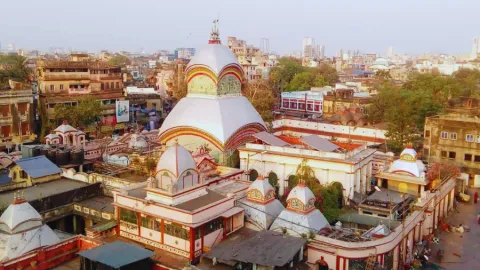
Image Section Title
Kalighat Kali Temple
Is Background Visible
Off
Images View Mode
Simple
Text Body
A Shakti Peeth, Kalighat is believed to be the site where goddess Sati’s toes fell. The idol here has a long, gold tongue. Darshan timings are from 5am to 2pm and 5pm to 10.30pm. Tuesdays and Saturdays are auspicious but tend to be crowded. The all-new Kalighat Skywalk has made access easier for devotees.
Is Background Visible
Off
Upload Images
Image Caption
Midnight Mass on Christmas Eve is a tradition here.
Upload Image
Image
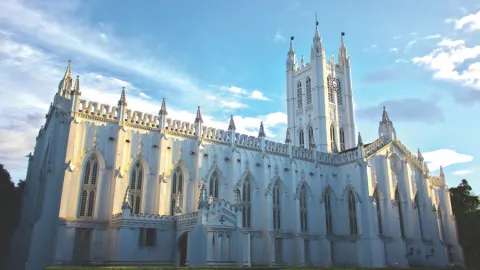
Image Section Title
St. Paul’s Cathedral
Is Background Visible
Off
Images View Mode
Simple
Text Body
The 175-feet-high Anglican cathedral built in the Gothic Revival style is known for its magnificent architecture. Music forms an integral form of worship at St. Paul’s Cathedral. The Midnight Mass on Christmas Eve draws huge crowds.
Is Background Visible
Off
Upload Images
Image Caption
The gateway to the masjid resembles the Buland Darwaza of Fatehpur Sikri.
Upload Image
Image
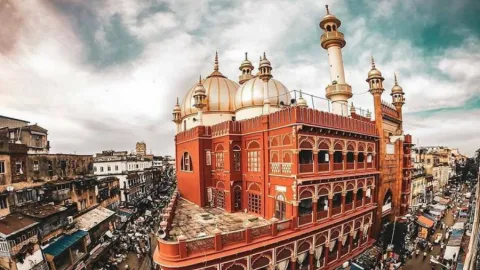
Image Section Title
Nakhoda Masjid
Is Background Visible
Off
Images View Mode
Simple
Text Body
Built in 1926 at Chitpore, this is Kolkata’s largest mosque with a prayer hall that can accommodate 10,000 people. The mosque is open from 6am to 8pm.
Is Background Visible
Off
Upload Images
Image Caption
The mosque at Dharamtala was built in 1842.
Upload Image
Image
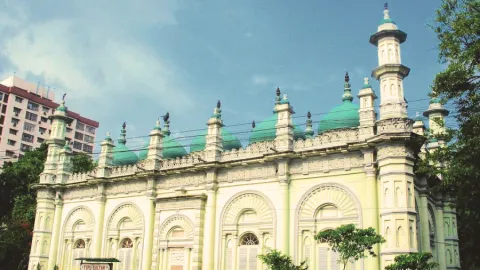
Image Section Title
Tipu Sultan Mosque
Is Background Visible
Off
Images View Mode
Simple
Text Body
The mosque with 16 domes and four minarets was built by Prince Ghulam Mohammed, son of Tipu Sultan. The heritage landmark located at Esplanade can accommodate 1,000 worshippers.
Is Background Visible
Off
Upload Images
Image Caption
The Burrabazar gurudwara is a historic landmark.
Upload Image
Image
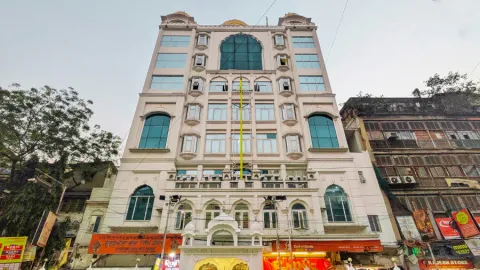
Image Section Title
Gurudwara Bari Sangat
Is Background Visible
Off
Images View Mode
Simple
Text Body
The Burrabazar gurudwara, visited by Guru Nanak Dev and Guru Tegh Bahadur, is open daily from 5am to 8pm. Langar (community kitchen) meals served from 9am to 3pm and 6pm to 10pm.
Is Background Visible
Off
Upload Images
Image Caption
A serene haven of Jain devotion.
Upload Image
Image
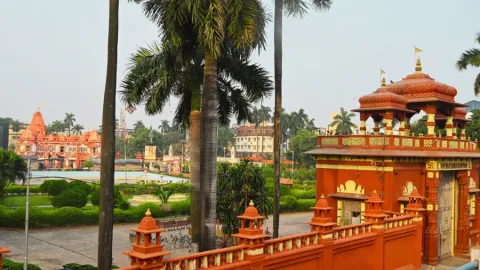
Image Section Title
Parshwanath Temple
Is Background Visible
Off
Images View Mode
Simple
Text Body
The century-old Shree Digambar Jain Parshwanath Temple in Belgachhia features intricate white marble carvings and hosts major Jain festivals. The temple is open from 5.30am to 11.30am and 6pm to 9pm.
Darjeeling
Is Background Visible
Off
Upload Images
Image Caption
High in the hills, this peaceful Buddhist monastery invites contemplation beneath Himalayan skies.
Upload Image
Image
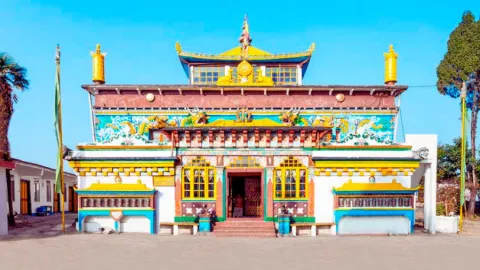
Image Section Title
Ghoom Monastery
Is Background Visible
Off
Images View Mode
Simple
Text Body
The quiet hill town around 700 feet above Darjeeling houses the 19th Century Yiga Choeling Monastery. It has a large clay statue of Maitreya Buddha.
Is Background Visible
Off
Upload Images
Image Caption
A hilltop sanctuary of Tibetan Buddhism.
Upload Image
Image
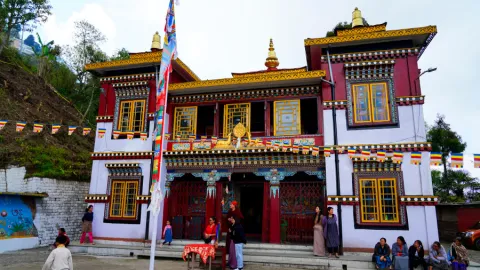
Image Section Title
Bhutia Busty Monastery
Is Background Visible
Off
Images View Mode
Simple
Text Body
The 18th Century Karma Dorjee Chyoling Monastery belongs to the Red Sect of Buddhist Lamas. The original monastery was destroyed by war and then by earthquake and later rebuilt.
Is Background Visible
Off
Upload Images
Image Caption
The 1873 Scottish church stands as a colonial-era gem.
Upload Image
Image
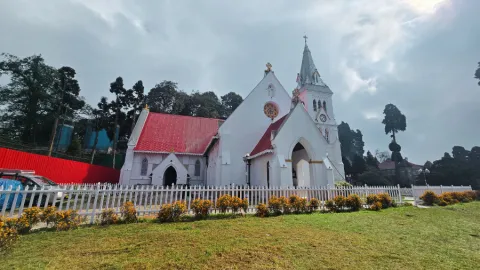
Image Section Title
St. Andrew’s Church
Is Background Visible
Off
Images View Mode
Simple
Text Body
The Scottish church originally built in 1843 was rebuilt in 1873 after being severely damaged by a lightning strike. The church is open for Sunday Mass.
Is Background Visible
Off
Published on
Article Image
Image
Updated On
Read Time
7-min read
Article Type
Experience
Story
Article Videos
Is Background Visible
Off
Upload Video
Display Type
Long Description
Content Family
General Purpose
Image Gallery
Upload Images
Is Background Visible
Off
Images View Mode
Simple
Video Gallery
Is Background Visible
Off
Upload Video
gallery view mode
horizontal
sub title
Take a tour of West Bengal’s religious destinations to discover devotion, tradition and architectural heritage
Comments