Walk into any sweet shop and you are likely to be greeted by these delicacies
Article Content
Text Body
Rosogolla, or rasgulla, has been Bengal’s sweet ambassador for many many years. But when in Bengal, you will be spoilt for choice to satiate your sweet tooth. Walk into any sweet shop — big or small — and you are likely to find sweets of various shapes, sizes and textures.
Here are a few classic favourites that may well have been eclipsed by Rosogolla’s star status and yet deserve a mention:
Is Background Visible
Off
Upload Images
Image Caption
Kamalabhog is Rajbhog with a hint of orange. (Shutterstock)
Upload Image
Image
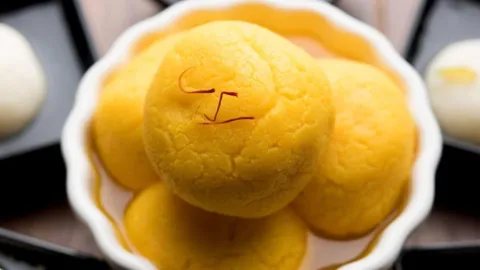
Image Section Title
Rajbhog
Is Background Visible
Off
Images View Mode
Simple
Text Body
Imagine a giant-sized rosogolla and you have the Rajbhog. The word ‘raj’ in Bengali means connected to ‘rajas’ or kings, ‘raj bhog’ means a royal feast. The sweet was once made in royal kitchens to impress kings and queens. Slowly, the sweet made its way from palaces to sweet shops. The Rajbhog is a Rosogolla with an inner filling made of kheer. In the winter months, one may also find a Gurer Rajbhog made with gur or jaggery. Another variant is the Komolabhog with a hint of orange. If Rosogolla claims the status for Bengal’s most famous and popular sweet, Rajbhog is reserved for special occasions.
Is Background Visible
Off
Upload Images
Image Caption
Pantua is distinctly different from Gulabjamun in taste and texture.
Upload Image
Image
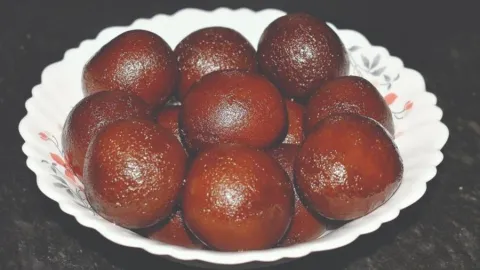
Image Section Title
Pantua
Is Background Visible
Off
Images View Mode
Simple
Text Body
Small round balls of chhana (cottage cheese) deep-fried till red and then soaked in sugar syrup — that is the Pantua for you. While it may resemble the Gulabjamun, the taste and texture is distinctly different. A close cousin of the Pantua is the Ledikeni, which is said to have been made in honour of Lady Canning, wife of the then Governor General of Bengal. Other variants include the cylindrical Lyangcha, the diamond-shaped Chitrakut dusted with white khoya dust and the coiled Chhanar Jilipi.
Is Background Visible
Off
Upload Images
Image Caption
Sandesh comes in various shapes, sizes and flavours. (Shutterstock)
Upload Image
Image
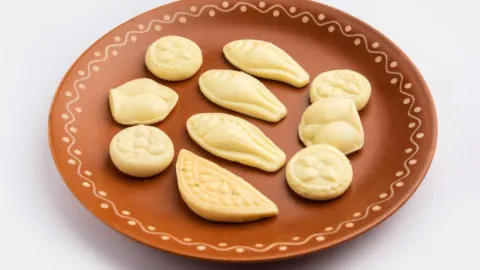
Image Section Title
Sandesh
Is Background Visible
Off
Images View Mode
Simple
Text Body
Sandesh, a quintessential Bengali sweet, has a vast variety — from simple ones for everyday use to gourmet desserts. The introduction of cottage cheese (chhana) with the advent of the Portuguese changed Bengali sweets and thus was born the present form of sandesh. Sandesh can be norom paak where the chhana is cooked lightly, just enough to bind it while retaining the moisture and making the sweet soft and melt-in-the-mouth, or kora paak, where the chhana is cooked long enough to almost solidify and become firm. Kora paak sandesh has a longer shelf life. Sandesh is available in different shapes (Shankha or conch, Ata or custard apple and more) and flavours (lebu or lime, gur or jaggery and now even butterscotch, vanilla or chocolate).
Is Background Visible
Off
Upload Images
Image Caption
Kheerkadam is another popular sweet. (Shutterstock)
Upload Image
Image
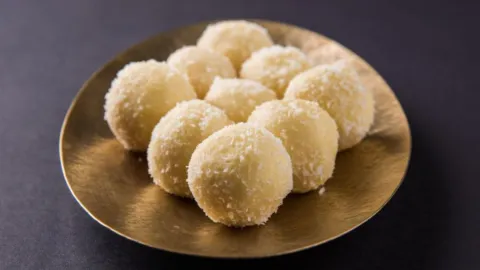
Image Section Title
Kheerkadam
Is Background Visible
Off
Images View Mode
Simple
Text Body
A small juicy rosogolla enveloped in a coating of kheer dusted with khoya is a favourite of many. The name Kheerkadam comes from the sweet’s resemblance to kadam flower. Its sibling is the Rosokodombo, a sweet first made in Malda to commemorate Chaitanya Mahaprabhu's visit, with an outer coating of poppy seeds.
Is Background Visible
Off
Upload Images
Image Caption
Chandrapuli is traditionally served on Bijoya Dashami in many households. (Shutterstock)
Upload Image
Image
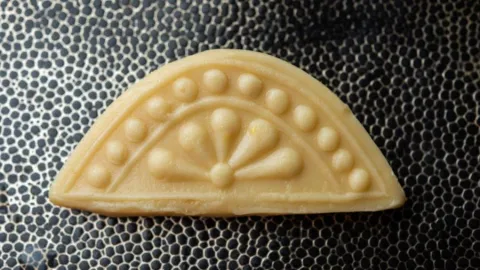
Image Section Title
Chandrapuli
Is Background Visible
Off
Images View Mode
Simple
Text Body
Chandra in Bengali means moon. This crescent-shaped sweet is made of coconut, kheer, sugar or jaggery. The mishti is usually made in wooden moulds. It has traditionally been a homemade Bijoyar mishti (sweets served after Bijoya Dashami). Originally homemade, it later made its way to racks of sweet shops.
Is Background Visible
Off
Published on
Article Image
Image
Updated On
Read Time
5-min read
Article Type
Experience
Article Image Mobile
Image
Article Image Caption
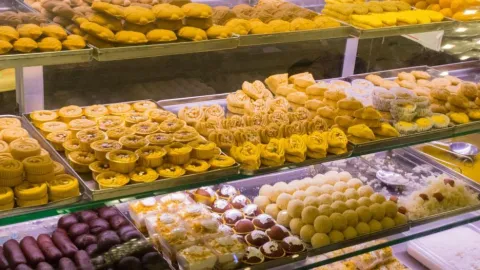
An array of sweets on display at a shop. (Shutterstock)
Display Type
Short Description
Content Family
General Purpose
Image Gallery
Upload Images
Is Background Visible
Off
Images View Mode
Simple
Video Gallery
Is Background Visible
Off
Upload Video
gallery view mode
horizontal
sub title
From the syrupy sweetness of Rajbhog and Pantua to the melt-in-the-mouth sandesh, walk into any sweet shop and you are likely to be greeted by these delicacies
banner image
Image
banner image mobile
Image
Comments